
 by
by 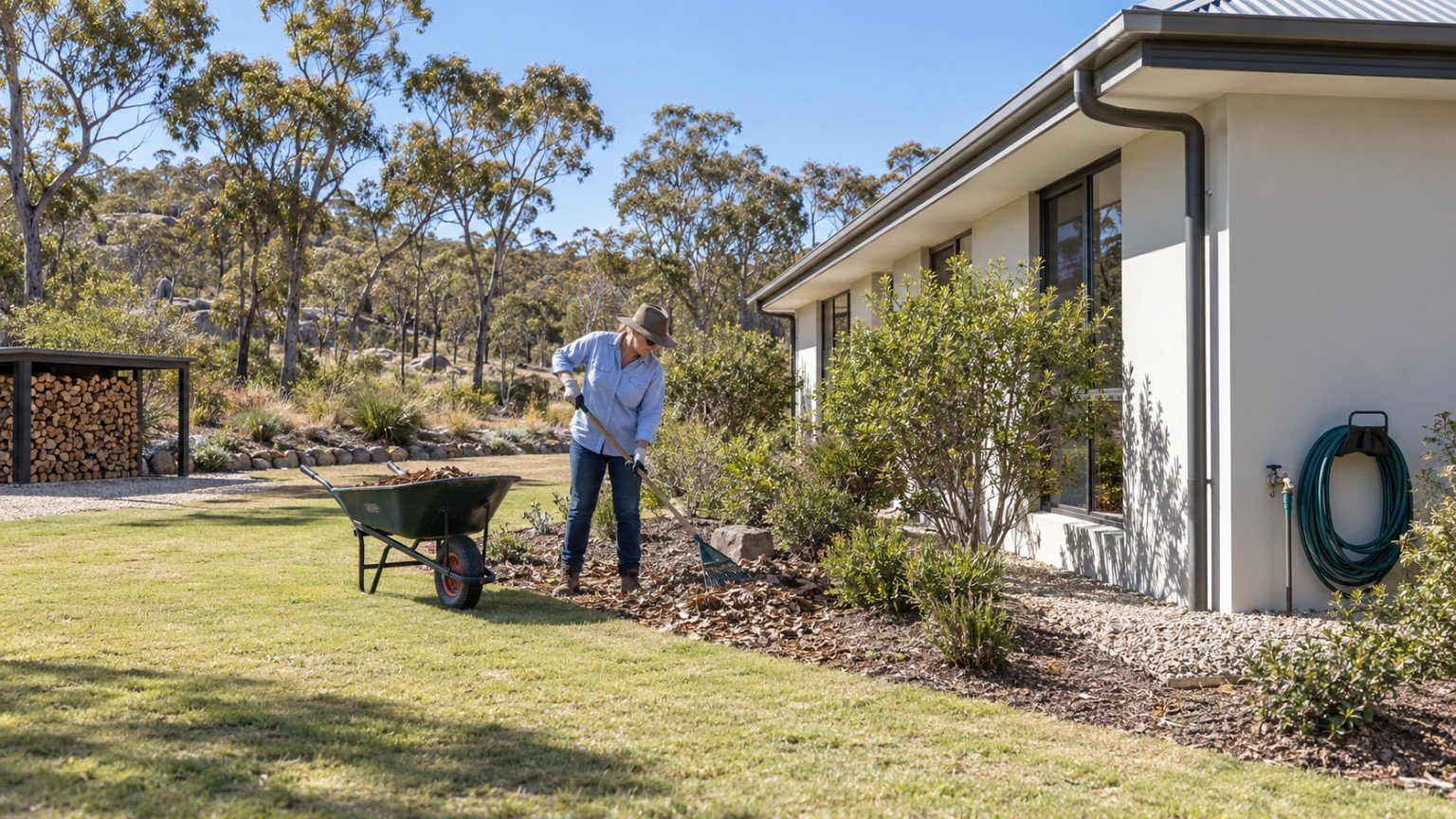
Bushfire season doesn’t fall on the same dates everywhere in Australia. Depending on where you live, the highest-risk months might be spring, summer or well into autumn, and some regions face a genuine risk for most of the year. Whatever the timing where you are, the outdoor area around your home is usually where bushfire preparation makes the biggest difference, because it’s the space that carries fuel closest to your walls, windows and roofline.
This checklist focuses on what you can reasonably do yourself in the yard and garden. It isn’t a substitute for your state or territory fire authority’s official bushfire survival plan, and if you’re in a genuinely high-risk area, that plan should always take priority over general advice like this.
Why outdoor preparation matters so much
Embers, not just the fire front itself, are one of the main ways homes catch fire during a bushfire. Embers can travel well ahead of a fire and settle in gutters, mulch beds, gaps under decking or piles of dry leaves. Reducing the fuel available in these spots, and keeping a clear, well-maintained zone close to the house, gives embers less to ignite.
Start with the zone right against the house
Clear gutters and roof areas
Dry leaves and debris in gutters are one of the most common ember-catching hazards. Clear gutters, valleys and any flat roof sections before the fire danger period begins in your area, and check them again if there’s been a lot of leaf drop since. If your roof is steep or hard to access safely, this is a job worth paying a professional to do rather than risking a fall.
Manage garden beds close to walls
Garden beds directly against the house are worth extra attention. Where possible, favour well-watered, low-growing plants over bark mulch or dry leaf litter right against the walls. If you do use mulch near the house, keep it damp during high-risk periods and avoid piling it against timber cladding, decking or door frames.
Reduce fuel load through the wider yard
Grass, leaf litter and dry vegetation
Keep grass mown short, especially in the weeks before your local fire danger period, and rake up dry leaves and bark regularly rather than letting them build up under trees or along fence lines. Dead or dying plants should be removed, since dry plant material burns far more readily than green, well-watered growth.
Trees, shrubs and clearance
Prune tree branches that overhang the roof or sit close to windows, and remove any dead branches. Where you have the space, creating some separation between taller trees and the house, and between clusters of shrubs, can reduce how easily fire moves through the garden. Local councils and fire authorities often have specific guidance on vegetation clearance around dwellings, particularly in mapped bushfire-prone areas, so it’s worth checking what applies to your property.
Outdoor furniture, structures and storage
Outdoor furniture cushions, door mats, firewood stacks and stored timber are all fuel sources too. During periods of elevated fire danger, consider moving cushions and mats indoors or into a shed, and store firewood away from the house rather than stacked against an external wall. Gas bottles should be stored upright, away from the house where possible, with the safety valve pointing away from any wall, in line with the supplier’s instructions.
Water access and basic equipment
Check that garden hoses are long enough to reach right around the house, and that outdoor taps are in working order. Some households also keep a metal bucket and a ladder accessible for putting out small embers on the ground or in gutters, though this should never be attempted if conditions are unsafe or a fire is already close. Your safety and the safety of anyone in the home always comes before property.
Check your local fire danger period and restrictions
Fire danger periods, total fire ban rules and permit requirements for burning off vary by state and territory, and often by local council area within a state. Before doing any burning off, or relying on specific dates for “bushfire season,” check directly with your state or territory’s fire authority and local council, since these details change year to year and region to region.
A simple pre-season checklist
- Gutters, roof valleys and downpipes cleared of leaves and debris
- Garden beds near the house kept low, green and well-watered where practical
- Grass mown short and dry leaf litter raked up regularly
- Dead branches and dying plants removed
- Firewood, cushions and door mats stored away from external walls during high-risk periods
- Hoses and outdoor taps checked and working
- Household bushfire survival plan reviewed against your state fire authority’s current guidance
None of these steps guarantee a home will be protected in a serious bushfire, and they’re not a replacement for an official bushfire survival plan or your local fire authority’s advice. What they do is reduce the everyday fuel and hazards sitting around the house, which is a genuinely useful head start heading into the riskier months wherever you live in Australia.



Join The Discussion