
 by
by 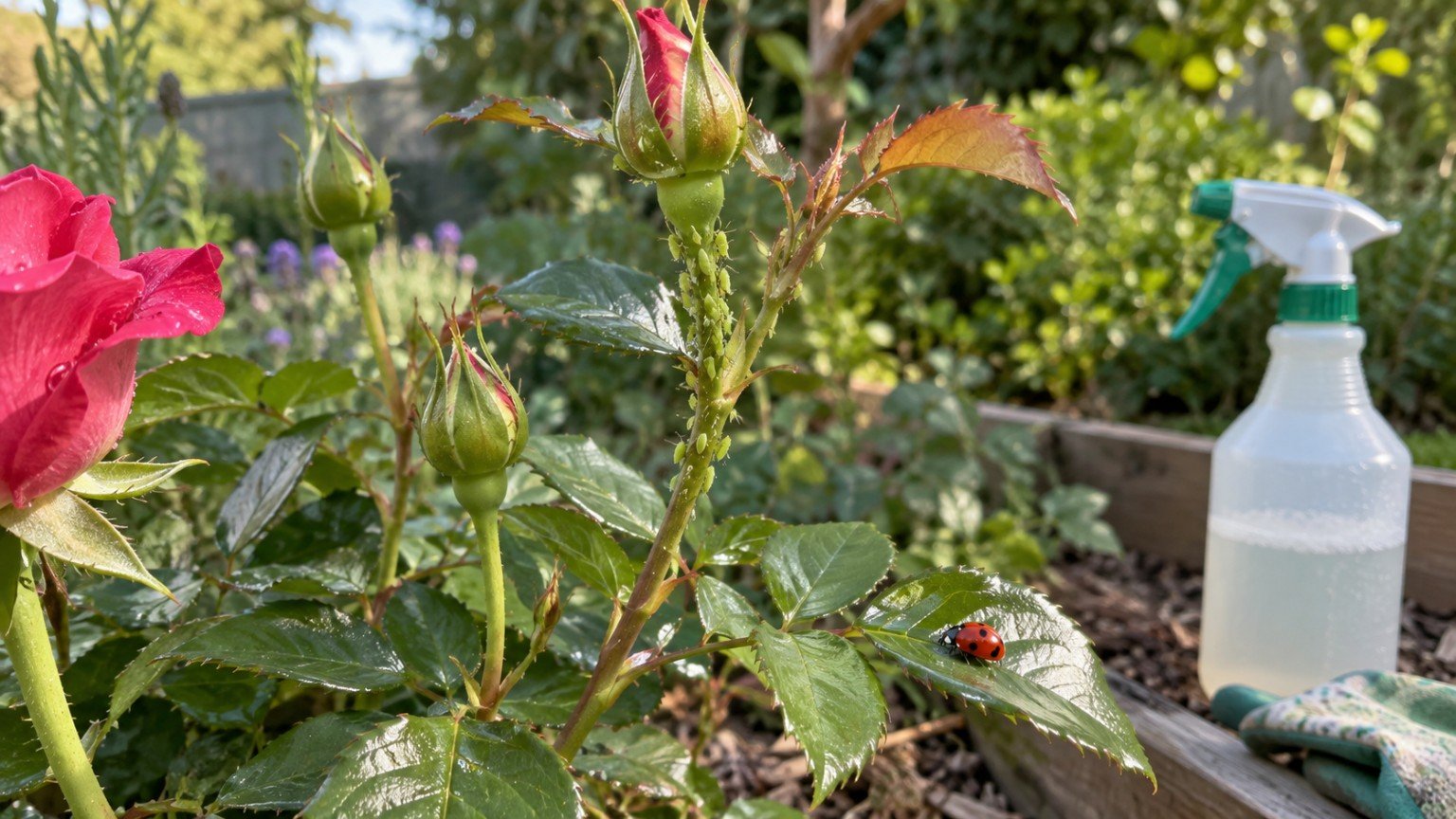
If the new growth on your roses or vegetable seedlings has suddenly turned sticky, curled or covered in tiny clustered insects, you are almost certainly looking at aphids. They are one of the most common garden pests across Australia, and while they can multiply quickly, they are also one of the easier pests to bring under control without reaching for harsh chemicals.
How to spot an aphid problem early
Aphids are small, soft-bodied insects, usually green, black or grey, that cluster on new shoots, buds and the undersides of leaves. Look for:
- Clusters of tiny insects on soft new growth, especially rose buds and the tips of vegetable seedlings
- Curled, distorted or yellowing leaves
- A sticky residue on leaves (honeydew, which aphids excrete)
- Black sooty mould developing on that sticky residue
- Ants moving up and down stems (ants farm aphids for their honeydew, so a sudden ant trail on a plant is often a sign)
Checking new growth every few days during warmer months means you catch an aphid colony while it is still small and easy to manage, rather than after it has spread through the whole plant.
Why aphids build up quickly in spring
Aphid populations tend to explode in spring and early summer because the insects reproduce extremely fast in mild, humid conditions and because most gardens have a flush of soft new growth at that time of year, which is exactly what aphids prefer to feed on. A few aphids on a Tuesday can genuinely be a visible colony by the weekend, so early and regular checking matters more than any single treatment.
Natural ways to control aphids
Blast them off with water
For a light infestation, a firm spray from the garden hose, aimed at the underside of leaves and along stems, will physically knock most aphids off the plant. Many will not find their way back, and this alone is often enough for a small outbreak caught early.
Hand removal
For small colonies on roses or seedlings, simply squashing the cluster between gloved fingers or wiping it away with a damp cloth is quick, free and immediately effective. It is not pleasant, but it works well on a handful of affected stems.
A homemade soap spray
A weak solution of a few drops of pure liquid soap (not detergent) in a litre of water, applied with a spray bottle directly onto the aphids, disrupts their outer coating and is a widely used, low-toxicity option for edible gardens. Test it on a small section of the plant first, since some soft-leaved plants can be sensitive, and spray in the cooler part of the day rather than in full sun to avoid leaf burn.
Encourage natural predators
Ladybirds, lacewings and hoverflies are voracious aphid eaters, and a single ladybird larva can get through a large number of aphids before it matures. Planting flowering herbs like dill, fennel, yarrow or alyssum nearby helps attract these beneficial insects and gives them somewhere to live between meals, which supports longer-term control rather than a one-off fix.
Companion planting
Strongly scented plants such as garlic, chives, marigolds and nasturtiums are commonly planted alongside roses and vegetables to help confuse aphids and other pests, or to act as a “trap crop” that draws aphids away from the plants you actually care about. Nasturtiums in particular are often used this way, since aphids tend to favour them over neighbouring vegetables.
When a targeted product might be worth considering
If a natural approach has not brought a heavy infestation under control after a couple of weeks of consistent effort, a horticultural soap or oil product labelled for aphid control on edible or ornamental plants (available at most garden centres) is the next step up. Always read and follow the label directions exactly, including any withholding period before harvesting edible crops, and avoid spraying open flowers when bees are active. If you are ever unsure whether a product is appropriate for a food crop, check the label or ask staff at a garden centre rather than guessing.
Keeping aphids from coming back
Aphids are drawn to soft, lush new growth, so plants that have been heavily fertilised with high-nitrogen feed are often more attractive to them. Feeding roses and vegetables at a steady, moderate rate rather than in big nitrogen-heavy bursts, keeping an eye on new growth through spring, and maintaining a garden that supports ladybirds and other predators all help keep populations from building up to problem levels again. A quick weekly check of your roses and vegetable beds through the warmer months is a small habit that saves a lot of frustration later.



Join The Discussion