
 by
by 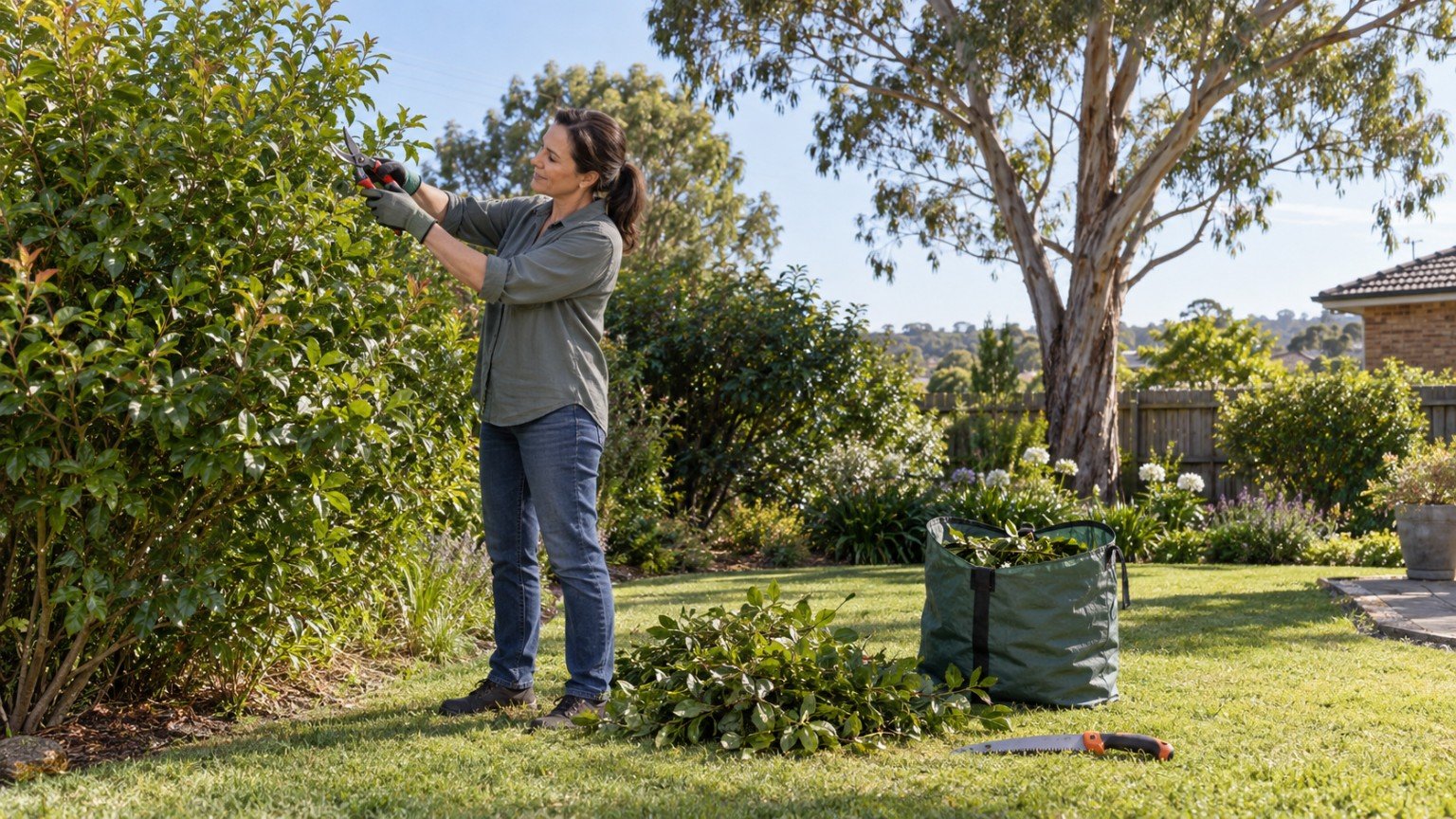
A bit of well-timed pruning keeps trees and shrubs healthy, shapely and safer around the home. It is also one of those garden jobs where it genuinely matters to know the line between what is safe to do yourself and what needs a professional. Small shrubs and low hedges are generally fine for most people to manage with basic hand tools. Large trees, anything near powerlines, and anything that would require a chainsaw or working at height are not.
This guide covers safe, straightforward pruning for smaller plants around the home, and is equally about knowing when to stop and call a qualified arborist.
What’s safe to prune yourself
As a general rule, if you can comfortably reach a branch from the ground or a stable, low step, using hand pruners or long-handled loppers, it is reasonable to consider pruning it yourself. This typically covers:
- Small to medium shrubs and hedges
- Low-growing ornamental trees within easy reach
- Dead, damaged or crossing branches on smaller plants
- Light shaping and tidying of established garden shrubs
Basic pruning technique
A few simple habits make a real difference to plant health:
- Use clean, sharp tools. Blunt or dirty blades crush stems rather than cutting cleanly, which slows healing and can spread disease between plants.
- Cut just above a bud or side branch. Cutting too far above a bud leaves a stub that can die back; cutting too close can damage the bud itself.
- Remove dead or damaged wood first. This is usually the safest and most beneficial cut to make, and it is easy to identify since dead wood is typically dry, brittle or a different colour to healthy growth.
- Step back and check your work as you go. It is easy to over-prune once you start; checking the overall shape regularly helps avoid removing more than intended.
- Avoid pruning during extreme heat or drought stress. Plants recover from pruning cuts better when they are not already under stress from hot, dry conditions.
Best time of year to prune
Timing varies by plant type, but as a general guide, many ornamental shrubs are best pruned just after flowering, so you are not cutting off next season’s buds. Deciduous trees and shrubs are often pruned during their dormant winter period, when the plant’s structure is easier to see without leaves. If you are unsure about the right timing for a specific plant, a quick search for that particular species, or a question to your local nursery, is worth doing before you start.
When to call a licensed arborist instead
This is the most important part of this guide. Some pruning jobs are genuinely dangerous to attempt without the right training, equipment and insurance, and are best left to a qualified professional. Call a licensed arborist rather than doing it yourself if the job involves any of the following:
- Large or established trees. Anything beyond the reach of ground-level tools, particularly mature trees with substantial limbs.
- Branches near or touching powerlines. This is a serious electrocution risk and should never be attempted by anyone other than a qualified professional, often in coordination with the electricity network provider.
- Any job requiring a chainsaw. Chainsaws cause a significant number of serious home injuries every year, and using one correctly and safely takes proper training.
- Any job requiring you to leave the ground. Ladders, roof access or climbing into a tree all introduce fall risk that a professional is equipped and trained to manage.
- Structurally significant limb removal. Large cuts on mature trees can affect the tree’s stability and health long-term, and are best assessed by someone qualified to judge the tree’s structure.
- Trees that may be protected. Some councils have tree protection rules for significant or heritage trees. A licensed arborist can advise on this, and can also help you check with your local council before any major work goes ahead.
A qualified arborist carries the right insurance, training and equipment for these jobs, and can also give you a proper assessment of a tree’s health and structural condition, something that is genuinely difficult to judge accurately from the ground.
Pruning is one part of a wider seasonal garden and home routine. For a broader look at what to keep on top of across the year, see our related seasonal home maintenance calendar.
Tool care and basic safety
For the jobs that are safe to do yourself, a few basics go a long way: wear gloves and eye protection, keep tools clean and sharp, never prune in wet or windy conditions, and always be aware of what is above and around you before you start cutting. If in doubt about whether a job is within safe DIY territory, it almost always is not, and a quick call to a local arborist for a quote is a small cost next to the risk of a fall or a serious cut.



Join The Discussion