
 by
by 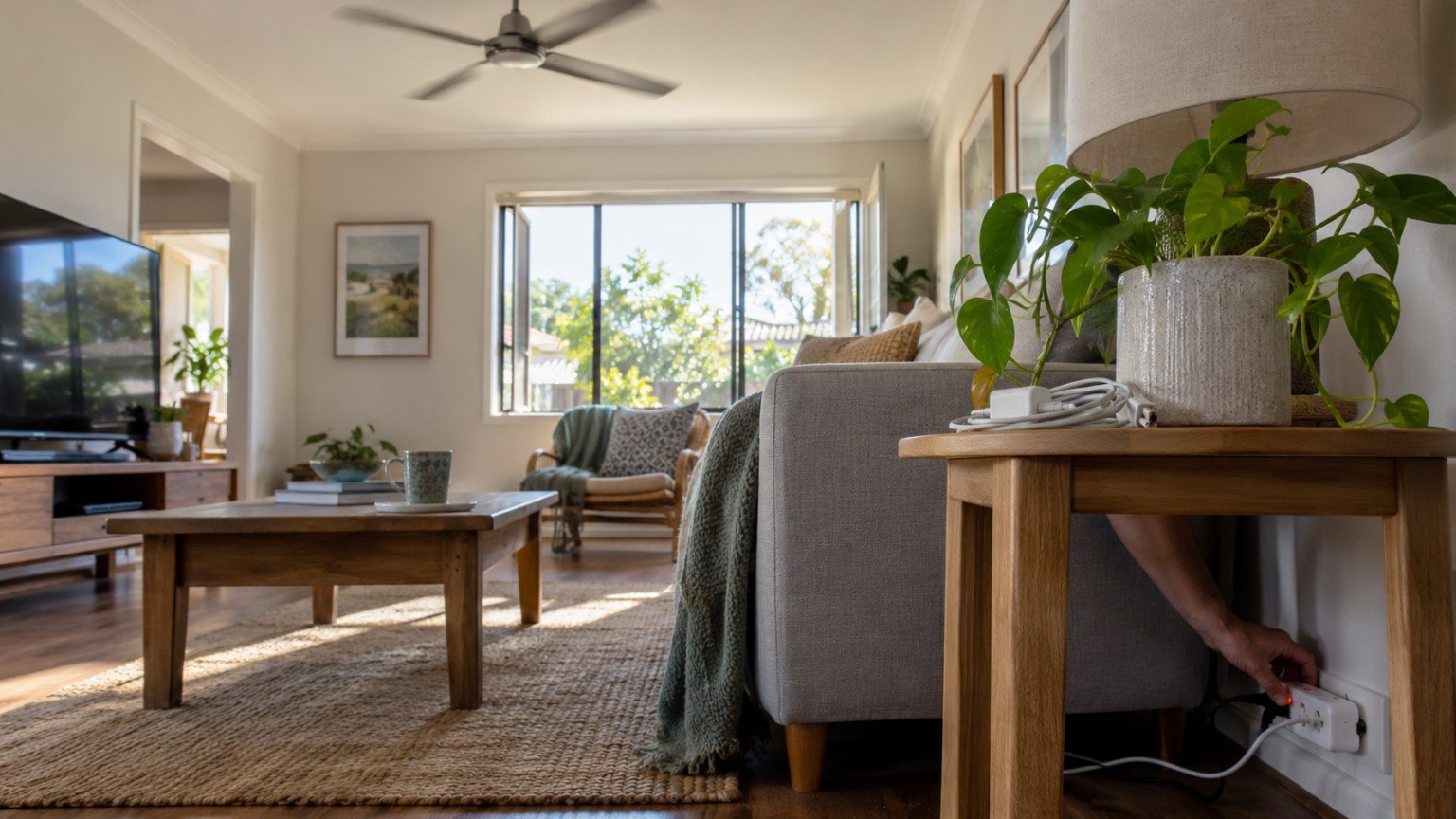
Most advice on cutting electricity costs starts with buying something: solar panels, a more efficient appliance, better insulation. All of that helps, but it isn’t the only lever available. A surprising amount of the average household’s power use comes down to habits and settings that cost nothing to change. Here’s where to start.
Understand where your money is actually going
Before changing anything, it helps to know what’s driving your bill. Heating and cooling are typically the biggest single contributor in most Australian homes, followed by hot water, then everything else. Your electricity retailer’s app or online portal usually breaks this down, or at least shows your daily usage pattern. A few minutes spent looking at when and how much you use makes the free changes below far more targeted than guessing.
Free changes to heating and cooling habits
Because climate control uses the most energy in most homes, small habit changes here have an outsized effect.
- Set your air conditioner a couple of degrees closer to the outdoor temperature rather than the extremes. Every degree of cooling or heating adds to running cost.
- Close doors to rooms you’re not using so you’re not heating or cooling empty space.
- Use blinds and curtains to block direct summer sun during the day, and open them in winter to let free warmth in.
- Turn heating and cooling off (or set it to a wider tolerance) overnight if you’re comfortable under a blanket or with a fan instead.
Free changes in the kitchen and laundry
These are the appliances people tend to run on habit rather than need.
- Wash clothes in cold water where the fabric and stain allow it. Most of the energy a washing machine uses goes into heating water, not spinning the drum.
- Run the dishwasher and washing machine only with a full load, and skip the heated dry cycle on the dishwasher if it has one, letting dishes air dry instead.
- Match saucepan size to the stove element or hotplate, and put a lid on when boiling or simmering. It cooks faster and wastes less heat.
- Only boil the amount of water you actually need in the kettle.
Standby power and small appliances
Many devices draw power even when they’re “off” but still plugged in. It’s a smaller saving individually, but it adds up across a household.
- Turn off power points at the wall for televisions, game consoles, chargers and appliances you’re not using, rather than leaving them on standby.
- Unplug phone and laptop chargers once the device is charged.
- If you have a second fridge or freezer running mostly empty, consider whether you genuinely need it switched on all the time.
Habits that suit both renters and owners
None of the changes above require permission from a landlord or any spending, which makes them genuinely available to renters as well as owners. If you rent, it’s also worth checking your lease or asking your property manager whether any efficiency features already exist in the home, like a programmable thermostat or timer switches, that you might not be using to their full advantage.
Reading your bill to track progress
Once you’ve made a few of these changes, compare your usage over a few weeks against the same period last year or last quarter if your retailer’s app allows it. Weather makes a real difference to heating and cooling costs, so a direct month-to-month comparison can be misleading. Looking at the same season a year apart gives a fairer picture of whether the habit changes are actually working.
When it’s worth checking further
If you’ve made these changes and your bill still feels high for your household size, it may be worth comparing electricity plans, since retail pricing varies more than many people realise for the same usage. Check your appliance manuals for their energy ratings too. An older fridge or air conditioner can use noticeably more power than a newer equivalent, which is useful to know even if replacing it isn’t on the cards right now.
None of this requires a big upfront outlay. Small, consistent habit changes across heating, cooling, laundry and standby power are genuinely the fastest way to bring a bill down without spending a cent.



Join The Discussion