
 by
by 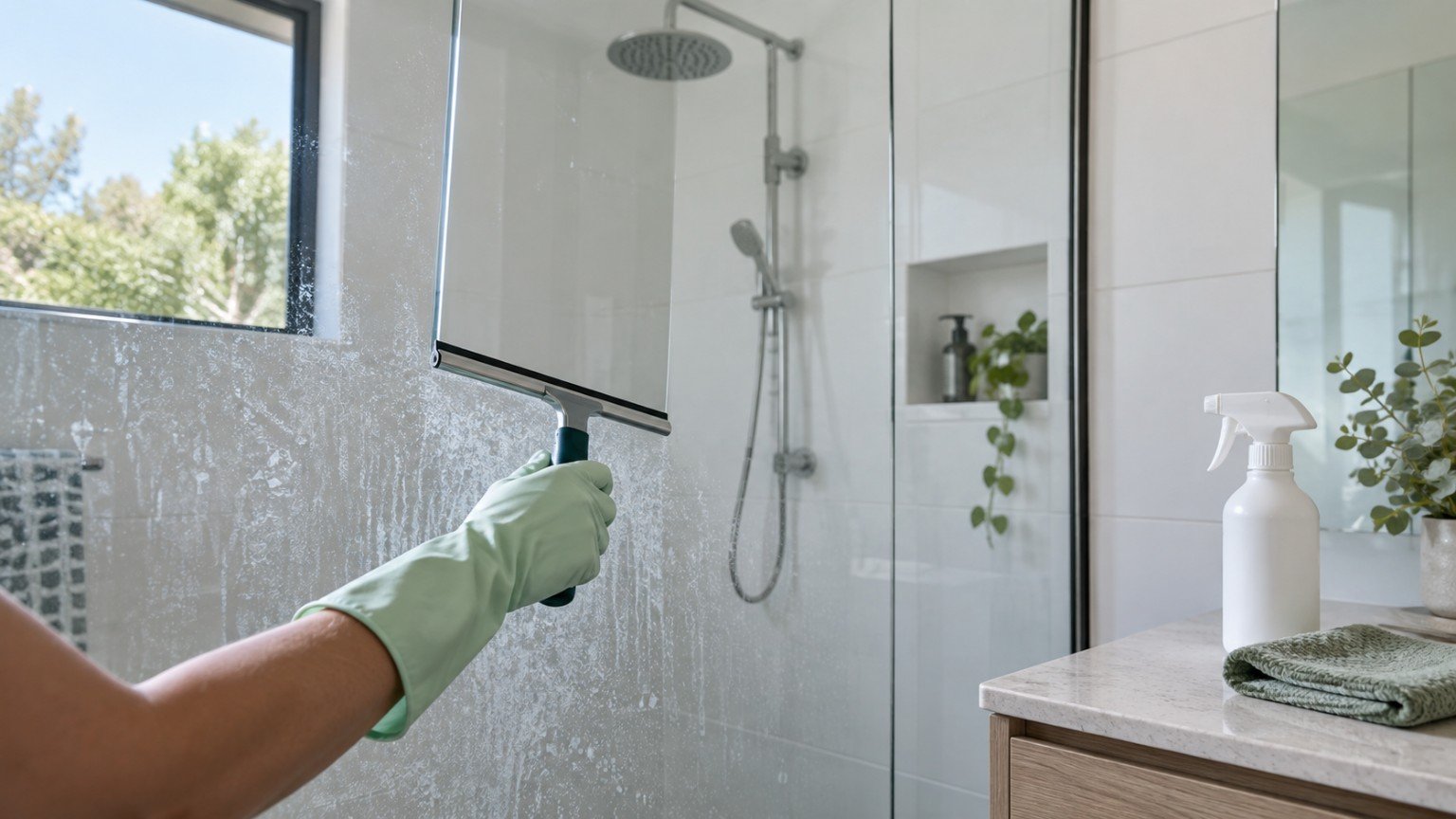
A shower screen covered in cloudy white marks is one of the most common bathroom complaints in Australian homes, and it isn’t dirt. Those stubborn white or grey patches are mineral deposits left behind by hard water, and they build up gradually every time the shower runs and the water evaporates off the glass.
What causes hard water stains on a shower screen
Tap water carries dissolved minerals, mostly calcium and magnesium. In areas with harder water, these minerals are more concentrated. Every time water splashes onto the glass and dries, it leaves a thin mineral film behind. Over weeks and months, these films layer on top of each other and harden into the chalky, sometimes almost frosted-looking buildup that won’t wipe away with a normal glass cleaner.
The longer the marks sit, the more they bond to the glass surface, which is why a shower screen that hasn’t been treated in a while often needs a stronger approach than one that gets a quick wipe-down each week.
What you’ll need
- White vinegar (the cheapest and most reliable option for most households)
- A spray bottle
- A soft microfibre cloth or non-scratch sponge
- An old towel or cling wrap for stubborn spots
- A squeegee
How to remove hard water stains from a shower screen
For light to moderate buildup
Fill a spray bottle with plain white vinegar and spray it generously over the affected glass. Leave it to sit for 10 to 15 minutes so the acid has time to break down the mineral deposits, then wipe with a soft cloth or non-scratch sponge. Rinse thoroughly with warm water and dry with a squeegee or clean towel to stop new marks forming while the glass is still wet.
For heavier, longer-term buildup
If a spray-and-wipe doesn’t shift the marks, soak a towel or paper towel in undiluted white vinegar and press it directly against the glass, or wrap the screen in vinegar-soaked cling wrap. Leave it in place for 30 minutes to an hour so the vinegar has longer contact time with the deposits, then remove and scrub gently with a non-scratch sponge before rinsing well.
For particularly thick buildup, a paste of bicarbonate of soda and a small amount of vinegar can add gentle abrasion. Apply it with a soft cloth, work it in circular motions, then rinse thoroughly. Always test a small corner of the glass first if you’re unsure how it will react.
Cleaning products to avoid on glass
Steer clear of steel wool, scouring pads or abrasive powders, which can permanently scratch glass and any protective coating. Avoid mixing vinegar with bleach or other cleaning chemicals, as combining cleaning products can create harmful fumes. If your shower screen has a special anti-limescale or protective coating, check the manufacturer’s care instructions before using vinegar, as some coatings are sensitive to strong acids.
How to stop hard water stains coming back
- Squeegee the glass after every shower. This single habit does more to prevent buildup than any cleaning product.
- Keep a microfibre cloth in the bathroom for a quick daily wipe-down.
- Consider a rinse-aid style shower spray, which leaves a light protective film that helps water bead off rather than dry flat on the glass.
- If hard water is a persistent issue across your whole home, not just the shower, a plumber can advise on whether a water filtration or softening system is worth considering for your area.
When the marks won’t come off
If stains persist after repeated vinegar treatments, the glass may have etching rather than surface buildup. Etching happens when mineral deposits are left untreated for a long time and slowly wear into the glass itself rather than sitting on top of it. Unlike surface staining, etching can’t be cleaned away because the damage is in the glass, and at that point a specialist glass restoration service or screen replacement is the only real fix. A cleaning routine that keeps on top of the marks early is the best way to avoid ever reaching that stage.
Join The Discussion