
 by
by 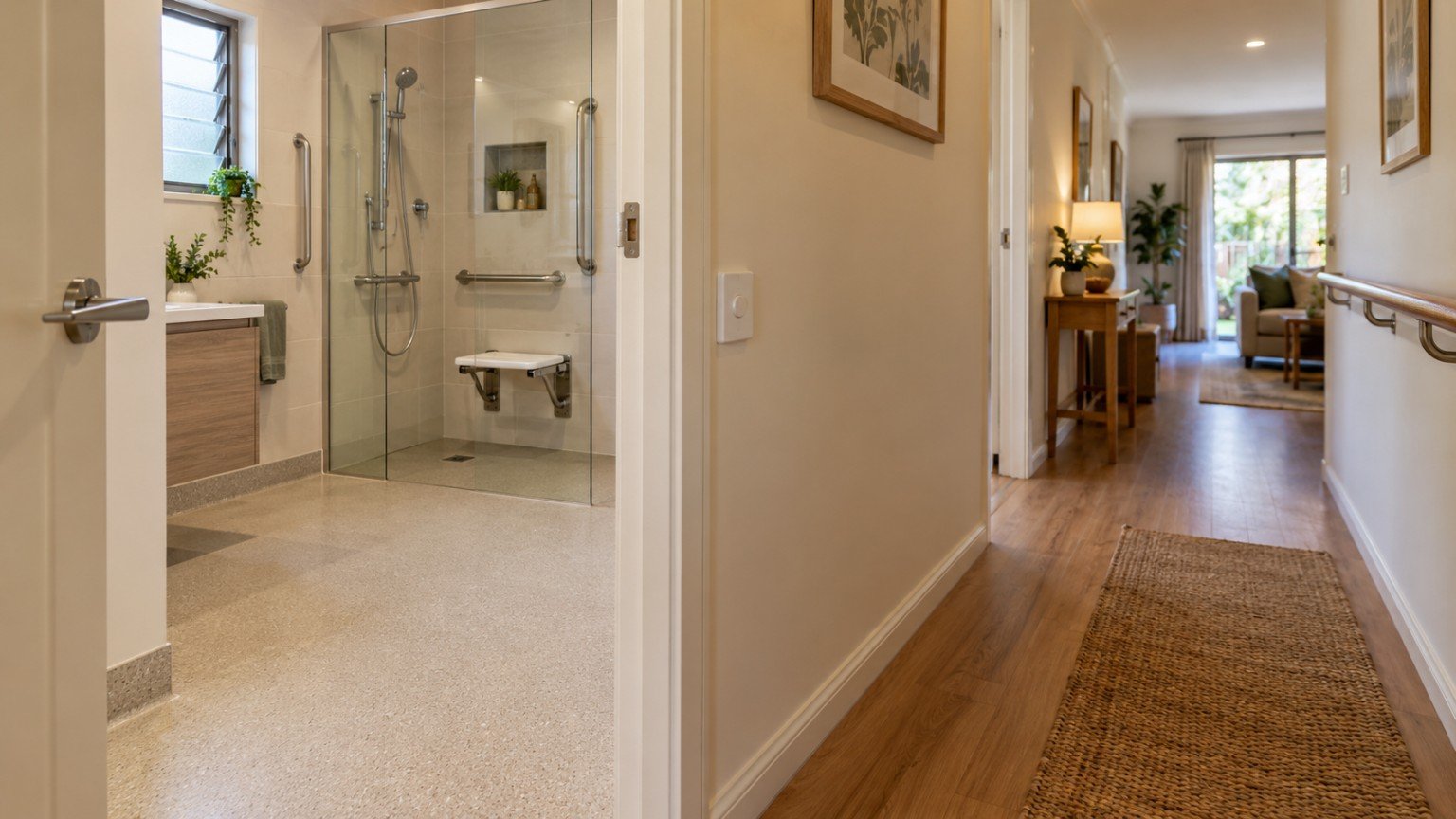
Setting a home up for ageing in place is about making everyday movement and daily tasks easier and safer over time, so that staying in a familiar home remains a realistic option for longer. Most of the practical changes are gradual and low-cost, and they work best when planned ahead rather than reacted to after a fall or a health scare.
Start with a walk-through, not a renovation
You do not need to overhaul a home to make it more age-friendly. The most useful first step is simply walking through it slowly, room by room, and noticing where movement feels awkward, where lighting is poor, or where a trip hazard sits. Doing this with the older person themselves, rather than for them, tends to surface the issues that actually matter day to day.
Entryways and hallways
- Check for a step-free or low-step entry, and consider a discreet ramp if there is currently a single step at the front or back door.
- Make sure hallways and doorways are clear of clutter and furniture that narrows the walking path.
- Add brighter, motion-sensor lighting in hallways, particularly for night-time trips to the bathroom.
- Secure loose rugs and mats, or remove them from main walking paths, since they are a common trip hazard.
Bathroom
The bathroom is one of the highest-risk rooms in most homes, largely because of wet, hard surfaces. Simple, non-structural changes make a real difference:
- Non-slip mats inside and outside the shower or bath.
- Grab rails near the toilet and in the shower, which can usually be fitted without major building work.
- A shower chair or handheld showerhead for anyone who finds standing for a full shower tiring.
- Good lighting, since low light in a bathroom at night is a common contributor to falls.
Kitchen and living areas
- Move everyday items (plates, mugs, common pantry staples) to mid-height shelves or cupboards, reducing the need to reach high or bend low.
- Choose a stable, sturdy step stool if higher shelves are still needed occasionally, rather than a wobbly chair.
- Keep well-used furniture, like an armchair or dining chair, at a height that is easy to get in and out of.
- Make sure there is a clear, unobstructed path between commonly used rooms.
Bedroom
- A bedside lamp within easy reach makes a big difference for anyone who gets up during the night.
- Bed height that allows feet to reach the floor comfortably when sitting on the edge helps with getting in and out safely.
- A phone or way to call for help kept close to the bed is a simple, practical safeguard.
Think ahead, but don’t overdo it
Ageing in place works best as an ongoing, gradual process rather than a single project. Reassess the home every year or two, or after any change in mobility or health, rather than assuming one round of changes will suit every future stage. Some changes are genuinely simple DIY jobs, like adding non-slip mats or better lighting, while others, such as fitting grab rails properly or widening a doorway, are better done by a licensed tradesperson to make sure they are installed safely and securely.
When to bring in a professional
This guide covers general home-layout and practical planning, not specific medical or therapeutic advice. If mobility, balance or a particular health condition is a genuine concern, an occupational therapist or accessibility professional can assess the home and the person’s specific needs, and recommend modifications that are appropriate for their situation. Many are able to advise on options that may be eligible for government or insurance support, which is worth asking about directly.
The bottom line
Most ageing-in-place changes are practical, affordable and can be introduced gradually: better lighting, clear pathways, grab rails, and furniture at a comfortable height. Getting ahead of these changes, rather than waiting for an incident to prompt them, is what makes staying in a familiar home a realistic option for longer.
Join The Discussion