
 by
by 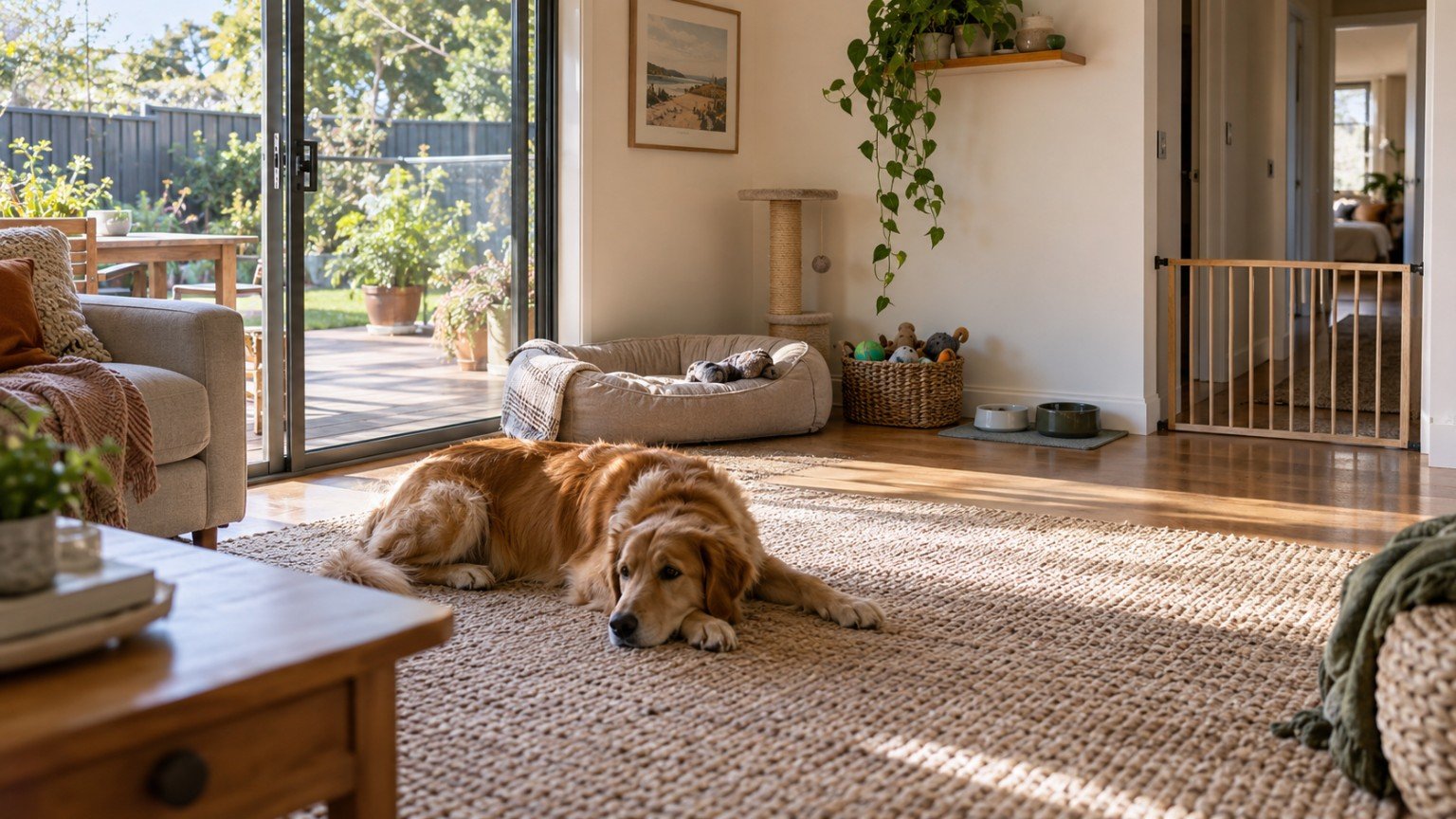
A pet-friendly home is more than a water bowl by the back door. It is a layout and a set of habits that keep your pet safe, keep your house liveable, and stop the small daily frictions that build up when a home was not really set up with an animal in mind. Whether you have just brought home a puppy, adopted a rescue cat, or you are trying to retrofit a home you have lived in for years, the same basic planning applies.
Start with safety, not decor
Before anything else, walk through your home at pet height. Get down on the floor if you can and look for what a curious animal would find first: dangling cords, small objects within reach, gaps under fences, or cleaning products stored low in a cupboard. This is the same instinct used for childproofing a home, and it is worth doing properly rather than assuming common sense will cover it.
- Store cleaning products, medications and rubbish bins somewhere a pet cannot nose into.
- Check indoor plants against a pet-toxicity list before you bring a new plant home, since several common houseplants are unsafe for cats and dogs.
- Secure or tuck away blind cords and loose cables, particularly if you have a chewer.
- Check garden fencing and gates for gaps a dog could squeeze through or dig under.
Set up zones that work for everyone
A genuinely pet-friendly home usually has a few defined zones rather than one animal free-for-all. This keeps mess contained and gives your pet a predictable space of their own.
A feeding and water station
Pick a spot that is easy to clean, ideally on tile, vinyl or another hard flooring rather than carpet. A cheap splash mat under bowls saves a lot of wiping.
A sleeping or retreat spot
Cats and dogs both benefit from having a bed or crate that is theirs, positioned somewhere that is not in a high-traffic hallway. For nervous or older pets, a quiet corner away from the front door reduces daily stress.
An outdoor or toileting area
If you have a yard, a defined toileting area (even just a mulched corner) makes clean-up faster and protects the rest of the lawn. For apartment living, a consistent walking or litter routine matters more than square metreage.
Choose pet-tolerant materials where you can
You do not need to renovate to make a home more pet-friendly. Small material choices make a real difference over time.
- Washable or leather-look fabric on sofas holds up better than pale, delicate upholstery.
- Hard flooring or low-pile rugs are easier to keep clean than deep-pile carpet, and rugs with a rubber backing are less likely to become a slip hazard for older pets.
- Scratch-resistant finishes on skirting boards and door frames near a cat’s favourite perch can save a repaint later.
- Washable slipcovers on cushions and throws mean fur and mud do not mean a full clean every time.
Build routines that reduce mess and stress
The physical setup only does half the job. A few simple routines make a pet-friendly home genuinely liveable day to day.
- Keep a towel by the back door for muddy paws after wet weather.
- Vacuum or sweep high-shedding areas more often during shedding season rather than waiting for a build-up.
- Groom regularly, especially for double-coated breeds, to cut down on loose fur around the house.
- Stick to a consistent feeding and walking schedule, since pets that know what to expect tend to settle and cause less household disruption.
If you are renting
Many renters are now keeping pets under Australia’s updated state-by-state rental pet rules, but it is still worth checking your lease terms and any conditions your landlord has set, such as professional carpet cleaning at the end of a tenancy. Renter-friendly options like washable rugs, removable scratch posts and freestanding pet gates let you protect the property without making permanent changes.
The bottom line
A pet-friendly home is really just a well-organised home with a few extra considerations: safety at pet height, defined zones, forgiving materials, and routines that stop mess from building up. None of it needs to be expensive or permanent. Small, consistent changes make daily life with a pet noticeably easier for everyone in the house, pets included.
Join The Discussion