
 by
by 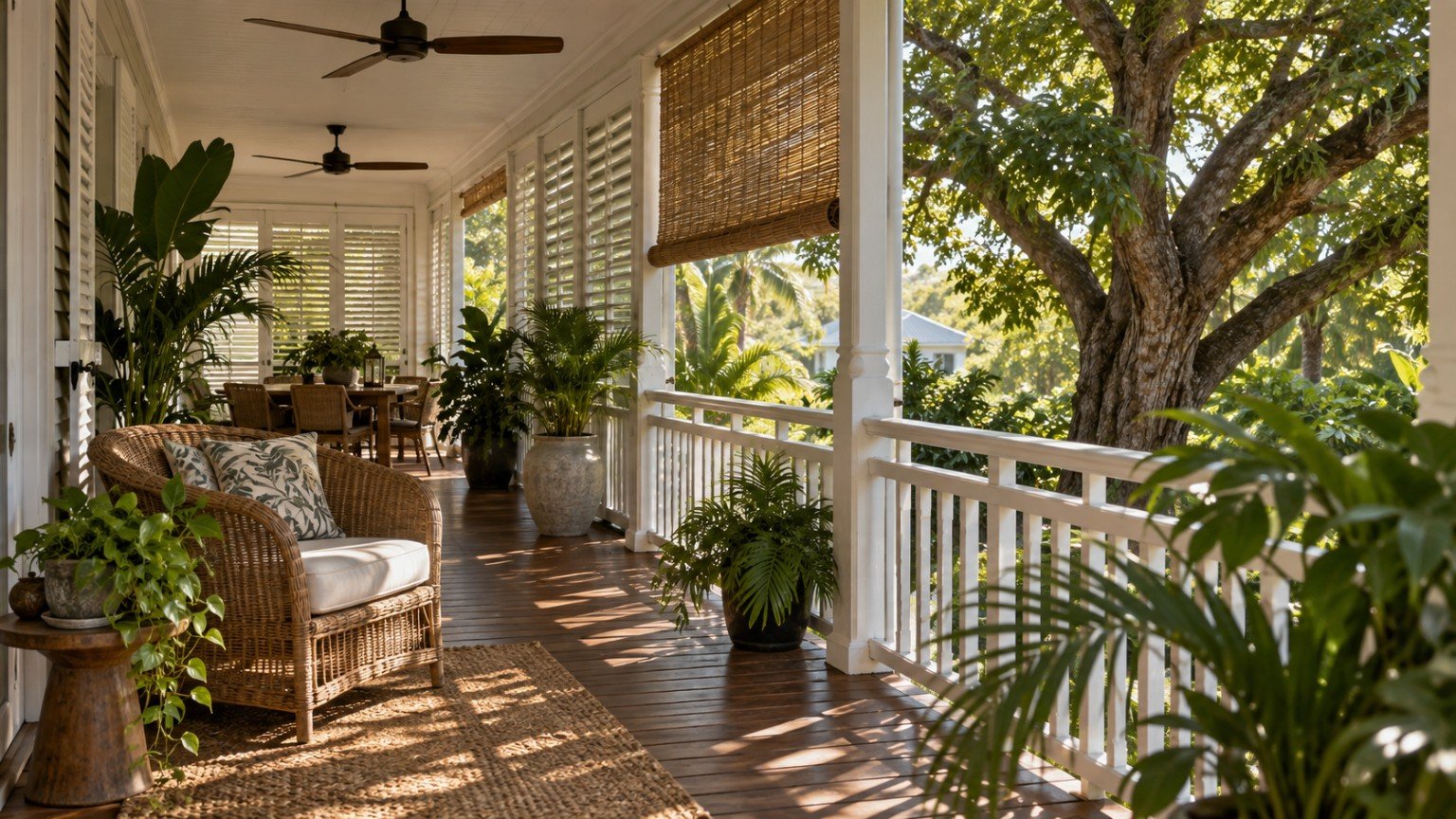
Queensland’s storm and cyclone season gets most of the attention, but heat is the other half of the climate equation, and arguably the one that affects daily comfort and running costs for far more of the year. Whether a home stays comfortable through a Queensland summer without relying entirely on air conditioning comes down to a handful of design and maintenance factors that are worth understanding, both when buying and when living in a home long term.
What to Look at When Buying: Predicting Summer Comfort
Some of the clearest clues to how a home will perform in summer are visible on an ordinary inspection, if you know what to look for:
- Orientation of the main living area. Which way does it face, and is it exposed to harsh afternoon western sun?
- Western glazing without shading. Large windows facing west with no eave, awning, blind or planting to shade them will heat a room significantly through the afternoon.
- Eaves and their depth. Deeper eaves shade walls and windows more effectively across the middle of the day.
- Cross-ventilation potential. Are there windows on opposite walls that can be opened together, particularly at night, to flush warm air out of the home?
- Ceiling insulation. Where it is visible, such as through a manhole, is insulation actually present and in reasonable condition?
- Roof colour. Darker roofs absorb more heat than lighter ones, all else being equal.
- Usable outdoor shade. Is there a shaded outdoor area, and are there established shade trees, particularly on the western side of the block?
- For apartments, which direction the unit faces and whether windows on more than one face allow any real airflow through the dwelling.
Why Queenslander Design Still Matters
The classic Queenslander, with its high ceilings, deep verandahs, elevated subfloor and casement or louvre windows, was not designed that way by accident. Each element responds directly to this climate: height lets hot air rise above living space, verandahs shade the walls, an elevated subfloor allows airflow underneath, and openable windows let a home be tuned to the weather on a given day. Many of these principles are worth understanding even in a home that is not a traditional Queenslander. For the renovation-rules side of character housing specifically, see our guide to buying a character home in Brisbane’s inner suburbs.
Improving an Existing Home: What to Do First
For an owner looking to improve summer comfort, there is a sensible order of priority, generally moving from the cheapest and most effective interventions to the more expensive ones:
- External shading on west and north facing glazing, whether through awnings, blinds, screens or planting.
- Ceiling insulation, if it is missing, thin or degraded.
- Sealing and ventilating the roof cavity, so trapped heat does not radiate down into living spaces.
- Ceiling fans, used before reaching for air conditioning, since moving air makes a room feel noticeably cooler at the same temperature.
- Night-purge ventilation, opening the home overnight to flush out heat accumulated during the day.
- Only then, properly sized and zoned air conditioning, rather than air conditioning as the first and only response.
The Sizing Trap
Air conditioning that is either undersized or oversized for the space costs more to run over time, and both mistakes are common. An undersized unit runs constantly and struggles to reach a comfortable temperature; an oversized unit cycles on and off rapidly, which is inefficient and can leave the air feeling clammy rather than genuinely cool. The reliable way to get this right is a proper load calculation for the specific room or home, not a guess based on floor area alone.
Running Costs and Tariffs
Electricity retail arrangements in South East Queensland differ from those in regional parts of the state, and rates, plans and any rebates change over time. Rather than quoting a figure here that may already be out of date by the time you read it, the sensible approach is to compare current retail offers directly when you are assessing running costs for a specific home.
The 2026 Regulatory Context
Queensland’s new Housing Code and Modern Homes Standards, changing across August and September 2026, affect thermal performance requirements for new residential building work. Rather than duplicating that detail here, our dedicated article on the Queensland Housing Code and Modern Homes Standards changes covers what is actually changing and when.
Practical Close
Keeping a Queensland home cool is rarely about one dramatic fix. It is the combination of orientation, shading, insulation, airflow and sensible air conditioning use, assessed in that order. For buyers, most of it can be read directly off a property during an inspection, which is exactly the kind of detail worth adding to your notes alongside the rest of your due diligence. Our second property inspection checklist and our broader guide to ownership costs beyond the purchase price are useful companions here, as is our general household issues checklist for owners.
General Research Information Only
This article is general research information only. It does not state or imply any specific energy rating, rebate, tariff or running cost for any home, and it is not a substitute for a professional energy assessment, a licensed electrician’s advice, or a proper air conditioning load calculation. Narevella is a property research platform, not an energy assessor or trades provider.
Useful Narevella Reading
- Queensland’s New Housing Code and Modern Homes Standards
- Buying a Character Home in Brisbane’s Inner Suburbs
- Queensland Storm and Cyclone Season Property Preparation Guide
- Common Household Issues in a Queensland Home
- Second Property Inspection Checklist
- Understanding Australian Property Ownership Costs Beyond the Purchase Price
You can also use the Queensland Property Research Checklist to structure your due diligence, Compare Suburbs to weigh up different areas, or tell us what you are after with Find Property For Me.
Join The Discussion