
 by
by 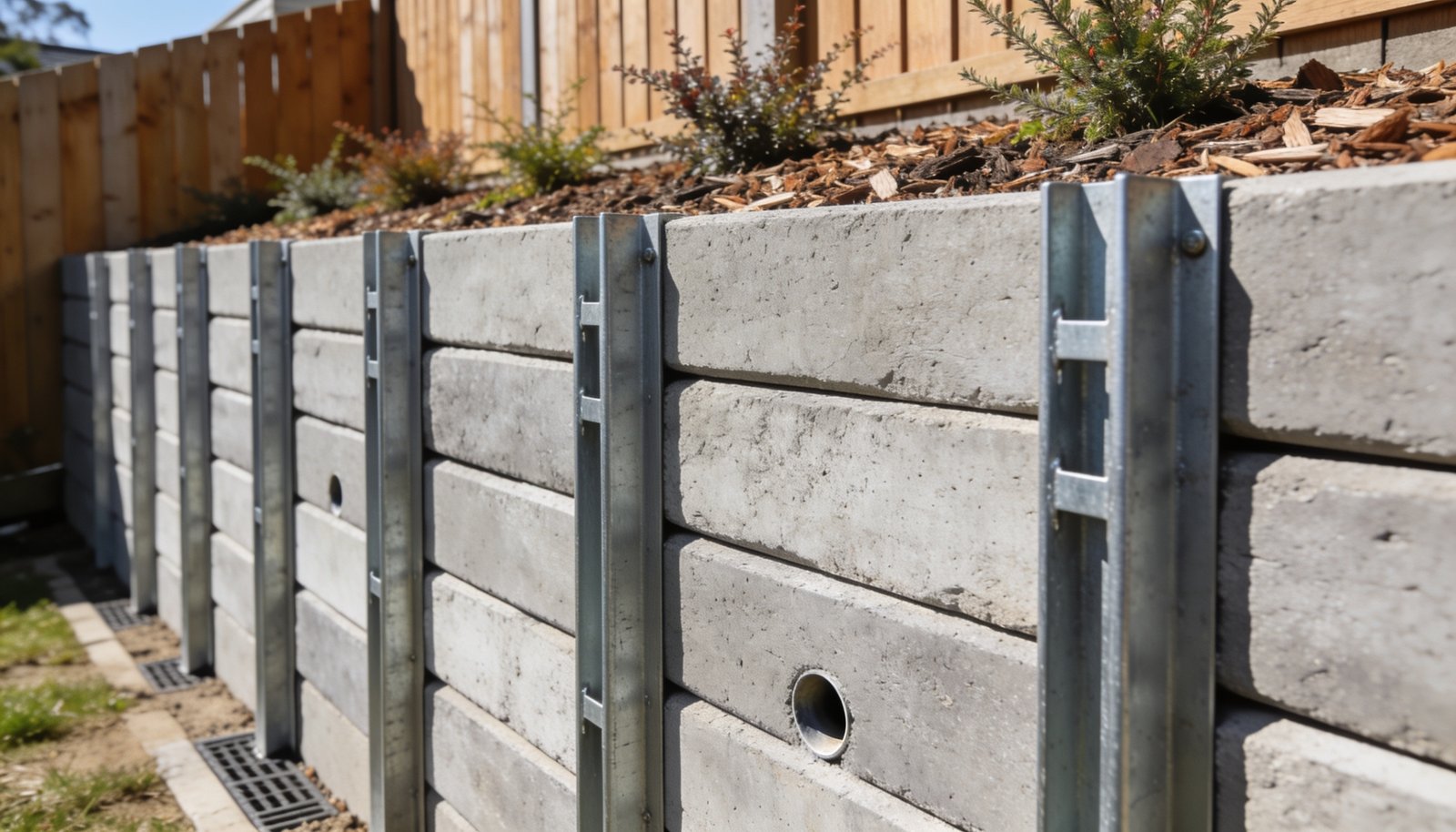
Retaining walls are easy to overlook at an inspection, but a failing wall can be expensive to fix and, in some cases, a safety issue. This guide covers what buyers should look for, how Queensland regulates retaining wall approvals, and when professional assessment matters.
Visual Warning Signs
Look for leaning or bulging along the face of the wall, horizontal or stepped cracking, gaps opening up at the top where the wall meets the ground behind it, and any sign that soil or garden beds behind the wall have slumped or sunk. Rust staining or crumbling on older concrete or besser block walls is also worth noting.
Ownership and Boundary Questions
It is not always obvious who owns or is responsible for a retaining wall, particularly when it sits on or near a boundary. A wall retaining a neighbour’s higher block can still affect your property even if you do not own it, since its failure could impact your land. Clarifying ownership and responsibility is worth doing before you rely on assumptions.
Approval Requirements in Queensland
Under the Building Regulation 2021, a retaining wall up to 1 metre high is generally accepted development and does not need building approval, provided it does not support a surcharge load, does not affect the stability of neighbouring property, and is not in a mapped flood or landslide hazard area. Walls over 1 metre generally require building approval and must be designed by a Registered Professional Engineer of Queensland (RPEQ). Builders carrying out structural retaining wall work generally need the appropriate QBCC licence.
Drainage Behind the Wall
Proper drainage behind a retaining wall, such as an agricultural drain and weep holes, is critical to how long it lasts. Water building up behind a wall without adequate drainage is a common cause of bulging, leaning, and eventual failure, so blocked or missing weep holes are worth taking seriously.
Cracking, Leaning and Movement
Any visible movement, especially on a wall over roughly 600mm to 1 metre high, is worth having assessed by a professional rather than dismissed as cosmetic. Movement can indicate inadequate drainage, an undersized wall for the load it is retaining, or a foundation issue.
Neighbouring Structures
Check whether nearby retaining walls, whether on the property or next door, appear to be holding back significant height or load, since these carry more consequence if they fail than a low garden edge.
Why Professional Assessment Can Matter
Retaining wall failure can be costly to rectify and, in some cases, poses a safety risk to structures or people nearby. For any wall showing signs of movement, or any wall over 1 metre that you cannot confirm was properly approved and engineered, a structural engineer’s assessment is the appropriate next step, not a visual guess.
Where This Fits Into Your Research
Retaining wall issues often relate to drainage. See our guide to drainage, stormwater and overland flow and pair this with a proper building and pest inspection. See also our broader guide on what to check before making an offer.
Where Narevella Can Help
Our free Property Inspection Notes tool gives you a structured way to record what you observe at an inspection. For a specific address, our Property Review can help.
Disclaimer
This guide provides general research information only and is not engineering or building advice. Any retaining wall showing signs of movement, or any wall you cannot confirm was properly approved, should be assessed by a Registered Professional Engineer of Queensland or another suitably qualified professional.



Join The Discussion