
 by
by 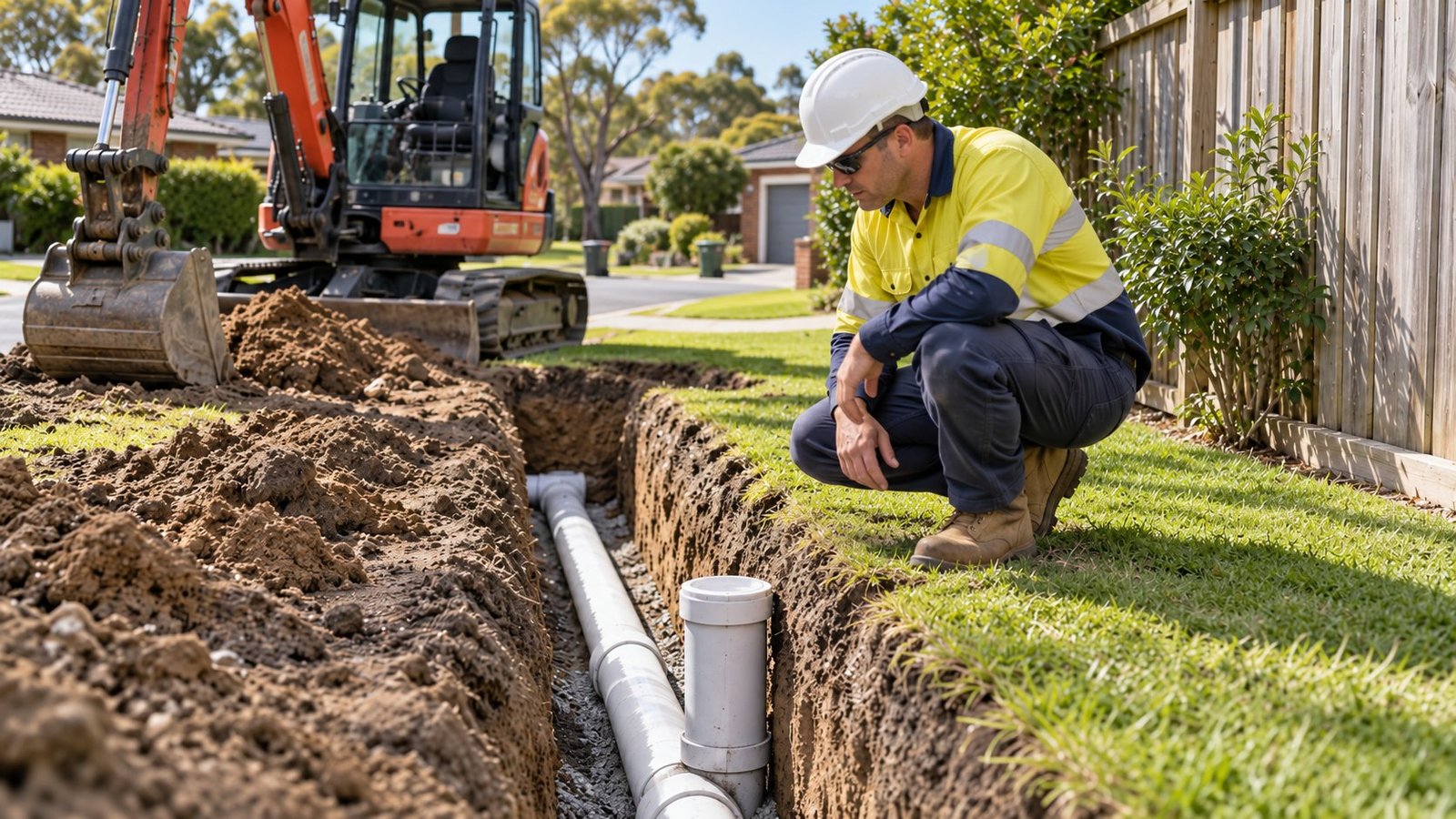
What sits underground on a property can matter just as much as what you can see. Sewer, water and stormwater infrastructure can restrict where you are able to build, and understanding what is on a specific property is worth doing before you buy, not after you have committed to a design.
Sewer, Water and Stormwater Infrastructure
Most established Queensland properties are connected to sewer, water and stormwater infrastructure maintained by the relevant regional water authority or council-owned utility, such as Queensland Urban Utilities or Unitywater in South East Queensland, or the responsible local provider elsewhere in the state. Exactly which authority manages the infrastructure for a given property depends on its location.
Easements
Infrastructure such as sewer mains often runs within a registered easement, giving the water authority a legal right to access that part of the land for maintenance and repairs. Registered easements are generally shown on the title search. See our guide to what an easement means for a property. Older infrastructure can sometimes exist without a formal registered easement, which is one reason it is worth checking directly with the water authority rather than relying on the title alone.
Building Over or Near Infrastructure
Building over or close to sewer or water infrastructure generally requires approval from the relevant water authority, separate from standard council building approval. Building without this approval can create real problems later, including at resale, or if the authority needs access for repairs and finds unauthorised structures in the way.
Access Requirements
Even within a private easement, the water authority generally retains the right to access the infrastructure for maintenance and emergency repairs. This can mean restrictions on planting, fencing, paving, or structures placed over or near the asset, beyond what a general easement note on the title might suggest.
Checking Maps and Plans
Property owners and buyers can generally request formal asset location information from the relevant water authority, which is a more reliable source than assumptions based on visible pits, covers, or markers on the surface.
Extensions, Pools and Secondary Dwellings
If you are planning an extension, a pool, or a secondary dwelling, check the location of underground infrastructure against your proposed design before you commit to a contract or a builder. A design that looks straightforward on paper can run into a build-over approval issue once the exact infrastructure location is confirmed.
Why Exact Property Research Matters
Underground infrastructure is one of the areas where guessing from what is visible on the surface is genuinely unreliable. Formal information from the water authority, cross-checked against the title search, is the appropriate way to confirm what is actually on a specific property.
Where This Fits Into Your Research
See our guides to reading a Queensland title search and drainage and stormwater, and our broader guide on what to check before making an offer.
Where Narevella Can Help
Our free Queensland Property Research Checklist covers title and infrastructure checks alongside the wider research process. For a specific address, our Property Review can help.
Disclaimer
This guide provides general research information only and is not engineering, planning, or legal advice. Always confirm the exact location of underground infrastructure and any build-over requirements directly with the relevant water authority before finalising building plans.



Join The Discussion