
 by
by 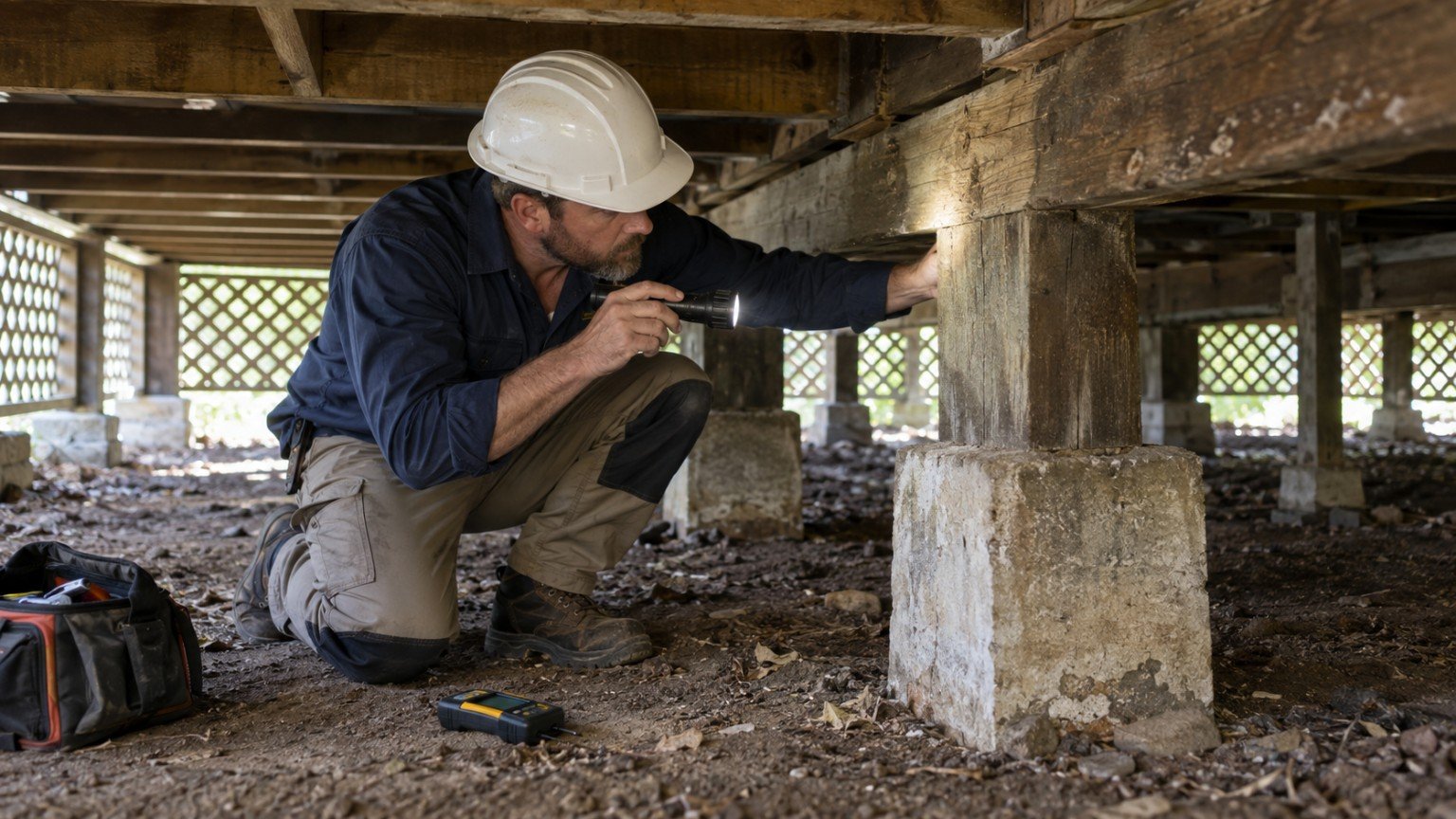
Queensland’s climate makes termite and timber pest activity one of the most consequential risks a home buyer or owner needs to research properly, yet it is often treated as a single tick-box item rather than a research question in its own right. This article is a companion to Narevella’s existing building and pest inspections guide, not a replacement for it. That article covers what to check on inspection day generally; this one focuses specifically on termite and timber pest risk, and on the questions a standard inspection leaves unanswered.
Why Queensland specifically
Queensland’s warm, humid conditions support termite activity across most of the state for much of the year, more so than in the cooler southern states. This is not a reason to panic about any particular property, but it is a reason to treat termite and timber pest research as a genuine due-diligence priority rather than an afterthought, particularly for timber-framed and low-set housing common across South East Queensland.
What a standard timber pest inspection does and does not do
A pre-purchase timber pest inspection carried out under the relevant Australian Standard (AS 4349.3) is a visual, non-invasive inspection. The inspector looks for visible evidence of termite activity or damage across accessible areas of the property. It is a genuinely useful check, but it has real limits worth understanding before you rely on it.
- It is not a guarantee against future infestation. A clear report today says nothing about what could happen next year.
- It does not always detect concealed activity behind cladding, tiling, paving or other coverings that the inspector cannot see behind or under without invasive investigation.
- A report noting “no visible evidence of activity” is not the same as “guaranteed termite-free.” This distinction is worth holding onto calmly rather than treating as a technicality.
Termite management systems: what to ask about
Many Queensland properties have some form of termite management system installed. Broadly, these fall into three categories a buyer is likely to encounter:
- Chemical soil treatment zones, where a chemical barrier is applied to the soil around and under the building.
- Physical or particle barriers, typically installed under the slab at the time of construction.
- Above-ground bait stations, positioned around the property to monitor for and intercept termite activity.
This article will not recommend or name any specific product or brand. What matters practically is asking direct questions: is a system currently installed, when was it last serviced, and does a current service or warranty certificate exist? A lapsed system is a common and easy-to-miss red flag, since a system that has not been serviced for years may offer little more protection than having none at all.
Ongoing management once you own the property
Termite management is not a one-off task that ends at settlement. Queensland building industry guidance generally treats a regular timber pest inspection as standard practice for established homes, particularly timber-framed and low-set housing. Treat this as a sensible rule of thumb to confirm with a licensed pest inspector for your specific property, rather than as a fixed legal requirement, since this article is not stating a mandatory inspection interval.
What increases risk around a property
Some risk factors are safe to state as general knowledge, because they are about moisture and access rather than any specific product or claim:
- Timber-to-ground contact anywhere on the structure.
- Garden beds or mulch banked up against external walls.
- Downpipes discharging water near the foundation rather than away from it.
- Subfloor moisture, which is worth reading alongside Narevella’s common household issues checklist for the mould and moisture angle.
These factors also interact with drainage and site conditions more broadly. If you are researching a property on a slope, Narevella’s sloping block guide covers the drainage and soil side of the same picture, and it is worth reading both together. Storm and cyclone season conditions can also increase moisture around a property, which the storm and cyclone season preparation guide touches on.
Questions worth asking as a buyer
Ask directly whether any previous termite damage or treatment has ever occurred on the property. If the answer is yes, ask for the paperwork rather than accepting a verbal assurance. A seller or agent may genuinely believe a property has no history of termite activity without that belief being documented anywhere, so a written record is worth more than a confident answer.
This same discipline applies whether you are comparing an older, established home or something newer. Narevella’s new build versus established home questions article is a useful companion for thinking through how age and construction type change what you should be asking.
What this article deliberately does not cover
This article does not name any treatment product, chemical, brand or inspection company, and it does not state a specific inspection cost or warranty period. None of that detail is necessary for the research discipline that actually matters here.
The practical close
The same discipline Narevella applies elsewhere in due diligence applies here: convert “the report didn’t mention it” into a specific, current answer. Is a termite management system installed? When was it last serviced? Has a current certificate actually been sighted? Answering these three questions properly, in writing, is worth far more than assuming the absence of a comment in a report means the absence of a risk.
This article is general research information only and does not constitute pest control, building or legal advice. Always engage a licensed pest inspector and seek your own professional advice for a specific property.



Join The Discussion