
 by
by 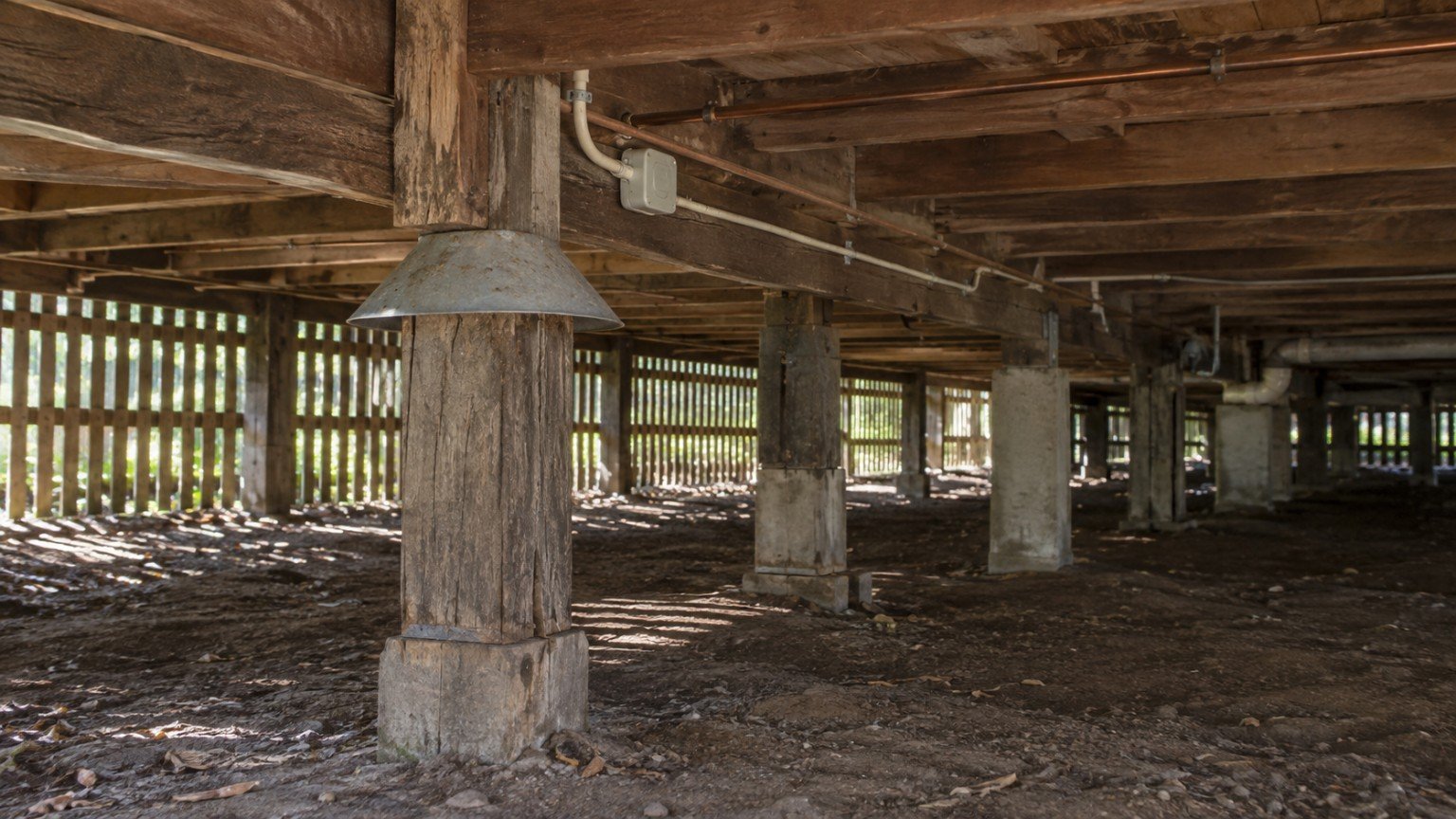
Older Queensland homes, particularly pre-1980s low-set and highset timber housing common across Logan, Ipswich, Wynnum, the Redlands and Brisbane’s middle-ring suburbs, come with a specific set of structural and services questions that a general new-versus-established comparison does not fully cover. This article stays narrowly on those questions: stumps and subfloor, wiring, plumbing and general services age. It is not about materials risks like asbestos, and it is not about heritage or character-overlay planning rules, both of which are covered elsewhere on Narevella.
Stumps and subfloor
Timber stumps and concrete or steel stumps are both common across older Queensland housing stock. Worth asking directly:
- Have the stumps ever been replaced, a process often referred to as reblocking or restumping?
- Has any relevelling work occurred?
- Is there visible evidence of movement, such as doors or windows binding, a visible floor slope, or cracking at wall-floor junctions?
Movement evidence rarely resolves itself on its own, and the cost of investigating early is almost always lower than the cost of leaving a slow-moving structural issue unchecked for several more years. This is one area where a buyer’s own eyes, walking the property and checking how doors and windows sit in their frames room by room, can genuinely add to what a written report tells you.
If movement is suspected, the correct next step is a geotechnical or structural opinion, not an attempt to diagnose the cause from a listing description or a walk-through impression. For the soil and foundation side of this picture, Narevella’s sloping block guide is a useful companion, and for water pooling around stumps, the same guide’s drainage discussion is relevant.
Subfloor ventilation and moisture
An older low-set home’s subfloor airflow is frequently reduced over time, often because of additions, paving, or garden beds built up against the perimeter of the house. Rather than restate the moisture and mould detail here, it is worth reading Narevella’s common household issues checklist alongside this article.
Electrical wiring
Older homes may retain original wiring types and fuse-based switchboards rather than modern circuit breakers and safety switches (RCDs). This article will not state a specific wiring type, an age threshold, or a specific safety-switch legal requirement, since that level of detail is not verified here and varies by property and by when work was last carried out. The practical instruction is simple: have a licensed electrician inspect the switchboard and wiring condition, and ask specifically whether safety switches are fitted.
A switchboard inspection is a relatively quick step compared with the cost of leaving an ageing electrical system unchecked, and it is one of the easiest older-home questions to actually resolve properly before you commit to a purchase, rather than one to leave until after you have moved in.
Plumbing
Older galvanised steel or original copper plumbing can corrode from the inside without any external sign, sometimes only showing up as reduced water pressure or discoloured water. Ask about any known history of plumbing replacement, and treat persistent low water pressure as a prompt to ask further questions rather than a fact to assume away.
It is also worth asking whether any leaks or repairs have occurred in recent years, and whether they were carried out by a licensed plumber. A section of pipe replaced once does not necessarily mean the rest of the system is in the same condition, so treat any partial repair history as a prompt for a further question rather than as reassurance that the whole system has been addressed.
Roof, hot water and general services age
It is worth thinking about the hot water system, switchboard and roof as one combined “how old is everything” question, since all of these commonly need attention around the same multi-decade mark in an unrenovated older home. Asking for the age of each, even approximately, gives you a more useful picture than any single item considered on its own. Roof type and replacement research is its own topic Narevella covers in more depth elsewhere.
Renovations, extensions and past work
Many older Queensland homes have been added to or partially renovated over the decades, sometimes well, and sometimes without the original structure and services being properly considered together as part of the same project. Ask whether any extension or major renovation matches the age of the original dwelling or was carried out separately, and whether that past work included updates to wiring, plumbing or stumps, or left them untouched. A renovation that updated the kitchen or bathroom but left the original wiring and plumbing behind the walls is a common pattern worth understanding specifically, rather than assuming the whole house was brought up to a similar standard at the same time.
What a standard building and pest inspection covers, and what it does not
A standard building and pest inspection is a visual inspection. It will note visible defects, but it will not test wiring, run water pressure tests, or provide an engineering opinion on stumps. Narevella’s building and pest inspections guide covers what that inspection does cover in detail. A licensed electrician, and where movement is suspected, a structural engineer, are separate and specific engagements that a building and pest inspection does not replace.
If you are working through a broader pre-offer checklist, Narevella’s second property inspection checklist is a useful companion for pulling these questions together before making an offer.
Older versus newer: a fair comparison
If you are still weighing up an older property against a newer one generally, Narevella’s new build versus established home questions article is the right place for that broader comparison. This article’s job is narrower and more specific: the structural and services questions an older Queensland home raises on its own.
The practical close
An older home is not automatically a worse buy. Queensland’s older housing stock includes some of its best-located and best-built homes. What changes with an older property is that several inspection-day assumptions need to become specific questions, answered in writing, rather than things a buyer quietly assumes are fine because nothing was mentioned. Getting clear, current answers on stumps, wiring, plumbing and services age before you commit is a small amount of extra work that can save a great deal of uncertainty later.
This article does not state any renovation cost, any age-based defect rate, or any property-specific claim. Every question above is intended to be asked of the relevant licensed professional for the specific property in front of you.
This article is general research information only and does not constitute building, electrical, plumbing or legal advice. Always engage the relevant licensed professional and seek your own advice for a specific property.



Join The Discussion