
 by
by 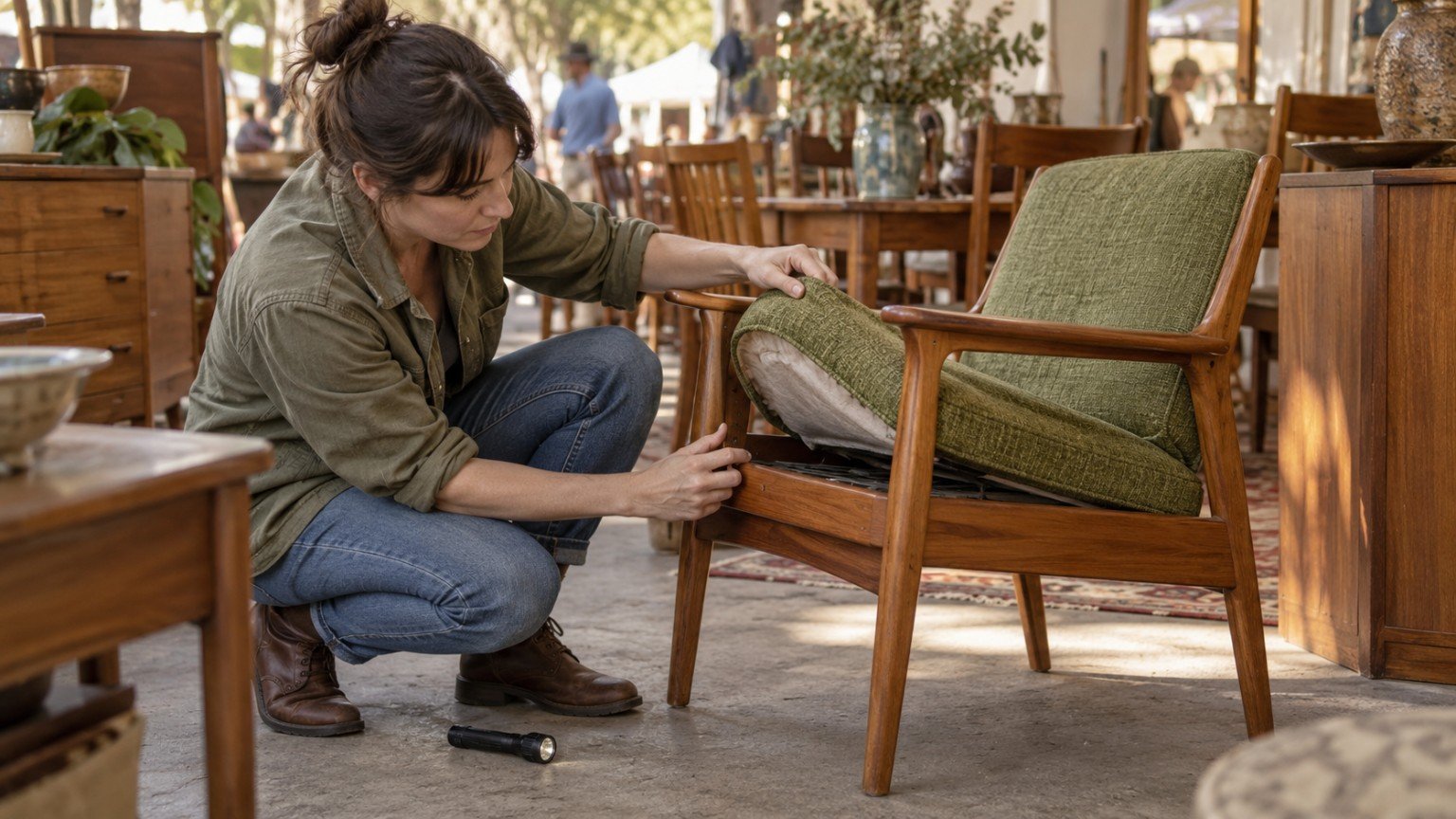
Second-hand furniture can be a genuinely good way to furnish a home without spending like new, and with the right checks it often outlasts cheaper flat-pack alternatives. The trick is knowing what actually matters when you are looking at a piece in someone’s lounge room, a market stall or a photo online, rather than in a showroom with good lighting and no history.
Why buying second-hand furniture makes sense
Older furniture, particularly anything made from solid timber, was often built to last longer than much of what is sold cheaply today. Buying second-hand also means you can see the exact condition of a piece before it arrives, rather than relying on a product photo. The trade-off is that there is no warranty and no returns desk, so the checking has to happen before money changes hands.
Check the frame and structure first
Before anything else, look at how the piece is actually built. For sofas and chairs, press down firmly on the seat and arms and see whether the frame flexes or creaks excessively. For tables, cabinets and shelving, give the piece a gentle side-to-side wobble test with your hand. A small amount of give in an old joint is normal, but a frame that shifts noticeably or feels loose at the base is a sign of deeper structural wear that may not be worth fixing.
With upholstered furniture, it helps to ask what the frame is made from if the seller knows. Solid timber or plywood frames tend to hold up far better over time than particleboard, which can crumble once it has taken any moisture.
Look closely at joints, screws and hardware
Joints are where second-hand furniture tends to show its age first. Check corners, legs and any point where two pieces of timber meet for cracks, gaps or old repairs. Dowel and mortise-and-tenon joints (the kind where one piece of timber slots into another) generally age better than glued butt joints, which can separate over years of use.
Open every drawer and door. Runners should slide smoothly without catching, and hinges should hold a door in place without it drifting open on its own. Loose hinges, worn drawer runners and stripped screw holes are usually simple to fix, but it is worth knowing about them before you agree on a price, since they are a fair reason to negotiate.
Check for pests, mould and odours
A musty or damp smell is one of the more common reasons to walk away from a second-hand piece, particularly anything that has been stored in a garage, shed or under a house. Mould on timber or fabric can often be treated, but it is worth being realistic about how deeply it has set in before you commit to taking it home.
For timber furniture, look for small round exit holes, fine sawdust-like frass, or a hollow sound when you tap the surface, all of which can point to a past or current borer problem. If you are unsure, it is reasonable to ask the seller directly whether the piece has ever had pest treatment, and to inspect it in good daylight rather than a dim room or a photo.
Test how it actually functions
Sit on chairs and sofas rather than just looking at them. Open and close every drawer and door a few times. If it is a bed frame, check that the base is solid and rated for the mattress size you plan to use. For anything electrical, such as a lamp, ask to see it plugged in and working, and inspect the cord for fraying or exposed wiring rather than assuming it is fine.
Measure before you buy
It is easy to fall for a piece that looks great in someone else’s home and then discover it does not fit through your doorway or suit your room. Measure the space you have in mind, including doorways, hallways and stairwells the piece will need to pass through, and compare that against the actual dimensions of the item rather than a rough guess.
Where to buy second-hand furniture safely
Online marketplaces, local buy-swap-sell groups, op shops, deceased estate sales and council verge collections are all common sources. Buying in person, where you can inspect and test a piece before paying, is generally the safer option. If you do buy sight unseen, ask for clear, well-lit photos of joints, the underside of the piece and any damage, and do not be afraid to ask direct questions about its history.
A quick pre-purchase checklist
- Frame feels solid with no excessive flex or wobble
- Joints are intact, with no major cracks or old repairs
- Drawers and doors open and close smoothly
- No musty smell, mould, or signs of past pest damage
- Measurements confirmed against your space and access points
- Any electrical components tested and cords inspected
A few minutes of checking before you buy can save a lot of hassle later, and it is often the difference between a second-hand find that serves a home well for years and one that ends up back on the kerb within months.
Join The Discussion