
 by
by 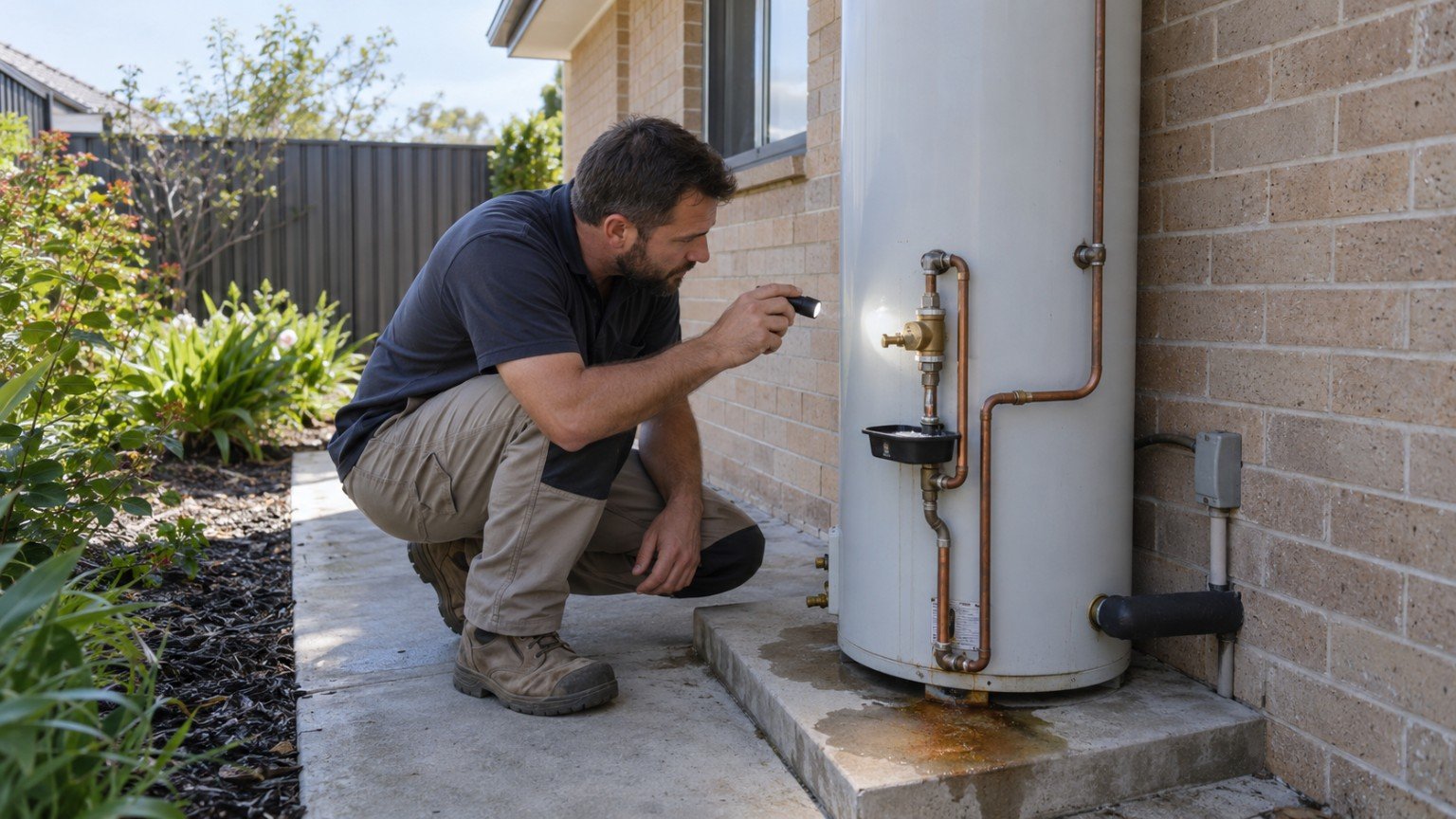
A hot water system tends to run quietly in the background for years, until suddenly it does not. Most units give off warning signs well before they fail completely, and catching those signs early can be the difference between a straightforward service call and waking up to a cold shower or, worse, a leaking tank.
This is a guide to spotting the signs, not a repair guide. Hot water systems involve gas, electricity and pressurised water, all of which are jobs for a licensed plumber or licensed gas fitter. What you can safely do yourself is notice the warning signs early and get someone qualified out before a small issue becomes a bigger one.
Signs you can see
- Rust-coloured or discoloured hot water. If hot water runs slightly brown, orange or rusty while cold water from the same tap runs clear, it can point to internal corrosion inside the tank.
- Water pooling around the base of the unit. Any visible moisture, dripping or pooling near the tank is worth having checked promptly, since it can indicate a developing leak.
- Visible rust or corrosion on the tank or fittings. Surface rust on the outside of an older tank, particularly around joints and valves, is a sign the unit’s condition is declining.
- A bulging or warped tank. This is a more serious sign and should prompt a call to a licensed plumber or gas fitter without delay.
Signs you can hear
- Rumbling, popping or banging noises. Over time, sediment can build up at the bottom of a storage tank. As the water heats, it can cause a rumbling or popping sound, which is worth having assessed even if the unit still seems to be working normally.
- Hissing or unusual sounds near a gas unit. Any hissing sound near a gas hot water system should be treated as urgent. Turn off the gas supply if it is safe to do so, leave the area, and call a licensed gas fitter immediately. Never attempt to inspect or adjust a gas connection yourself.
Signs in your water supply
- Reduced hot water pressure. A noticeable drop in pressure from hot taps, when cold water pressure is normal, can point to sediment buildup or a developing fault inside the unit.
- Inconsistent temperature. Water that runs hot, then lukewarm, then hot again within the same shower or use can indicate a failing thermostat or heating element.
- Hot water running out much faster than it used to. A storage tank that once lasted a full shower but now runs cold partway through may be losing capacity due to sediment buildup or a fault.
Age matters as much as symptoms
Most storage hot water systems have a working life of roughly eight to twelve years, depending on the type, water quality and how well it has been maintained, while continuous flow (instantaneous) systems can often last longer. If your unit is approaching or past this age range, it is worth having it assessed even without obvious symptoms, since older units are more likely to fail without much warning. Check the manufacturer’s data plate on the unit itself, which usually lists the installation date.
What to do if you notice any of these signs
If you notice any of the signs above, the safe next step is the same regardless of the cause: contact a licensed plumber for water-related issues, or a licensed gas fitter for anything involving a gas connection or a gas smell. Do not attempt to open, drain, adjust or repair a hot water unit yourself, particularly one connected to gas or mains electricity. A licensed professional can properly diagnose whether the unit needs a simple service, a part replaced, or a full replacement, and can do so safely.
If you ever smell gas near a hot water unit, treat it as an emergency: leave the area, avoid using switches or naked flames nearby, and contact your gas provider’s emergency line or a licensed gas fitter immediately.
A little prevention goes a long way
Regular servicing, generally recommended every year or two depending on the manufacturer, water hardness and unit type, can catch sediment buildup and minor wear before they turn into a full breakdown. It is a small, low-effort habit that tends to save both money and inconvenience in the long run.
For a broader look at common household issues worth keeping an eye on, see our related practical owner’s checklist.
Join The Discussion