
 by
by 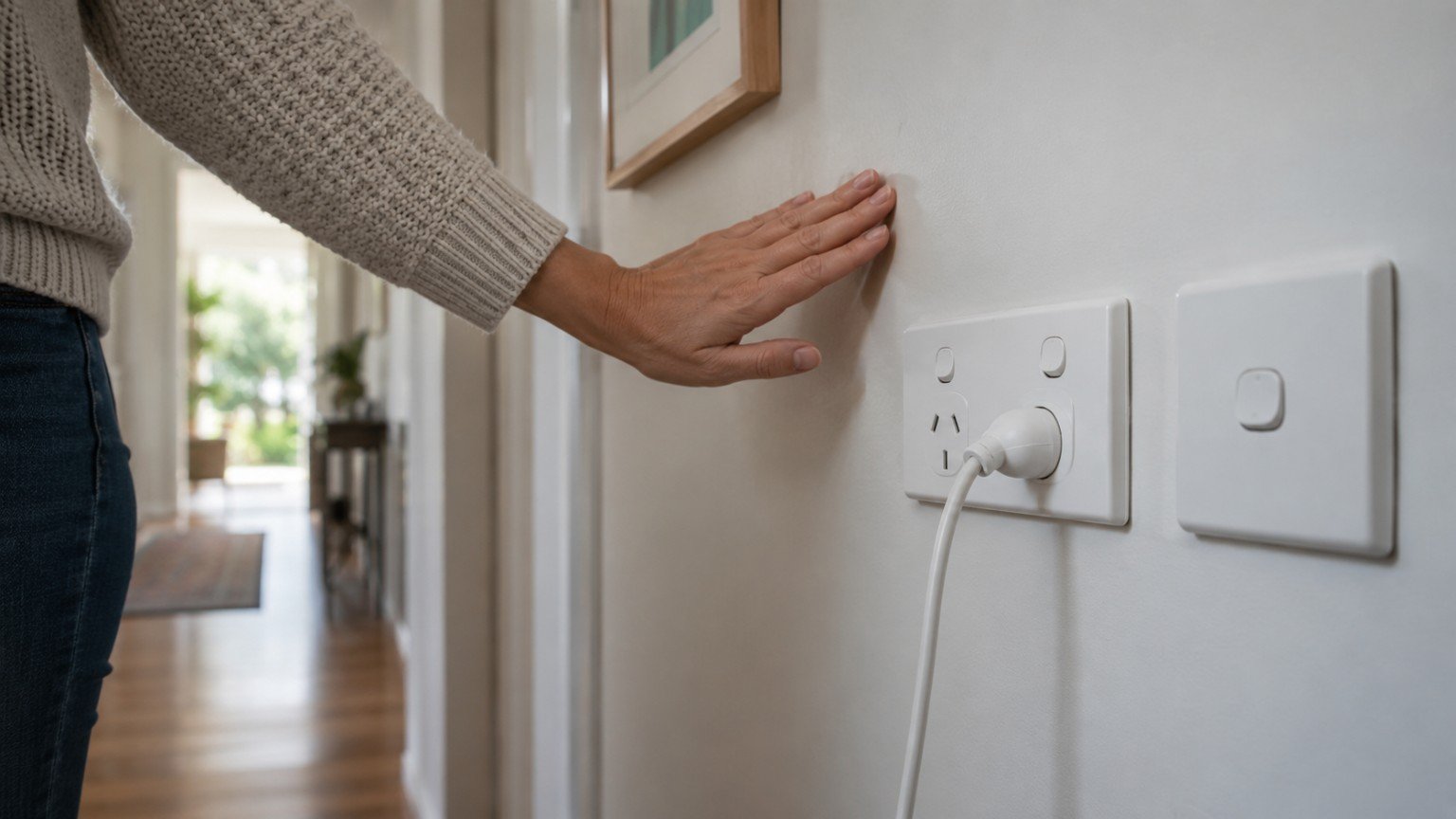
A light switch or power point that feels warm to touch is not something to shrug off. It is one of the more reliable early warning signs of an electrical fault, and it is exactly the kind of thing worth taking seriously the first time you notice it rather than waiting to see if it happens again. The good news is you do not need any electrical knowledge to respond safely. This is entirely about noticing the signs and knowing when to stop using something and call a licensed electrician.
Why warmth is a genuine warning sign
Switches and power points are not designed to generate noticeable heat during normal use. Warmth usually points to a loose connection, an overloaded circuit, ageing internal components, or a fault developing inside the wall, any of which can worsen over time and, in a small number of cases, lead to arcing or fire. It is not something to test further, poke at, or try to diagnose yourself. Treat any genuine warmth as a signal to stop using that switch or point and get it looked at.
Signs to watch for
Beyond warmth itself, a few related signs often show up together and all point to the same conclusion, which is to stop using the outlet and call an electrician.
- The switch plate or power point cover feels warm or hot to the back of your hand.
- A faint burning or plastic smell near the switch or point, even a mild one.
- Discolouration, browning, or scorch marks on the plate itself.
- A buzzing, crackling or humming sound coming from the switch or point.
- Lights connected to the switch flickering, dimming, or behaving inconsistently.
- A circuit breaker that trips repeatedly when that switch or point is used.
- Visible melting or a soft, deformed look to the plastic housing.
Any one of these on its own is worth acting on. Several together mean you should treat it as urgent.
What you can safely do
Your role here is to reduce risk and get professional help, not to investigate the cause.
- Stop using that switch or power point immediately. Unplug anything connected to it.
- Do not touch the switch or point again more than necessary, and never with wet or damp hands.
- If you can safely and easily identify the correct labelled circuit at your switchboard, you can switch that circuit off at the breaker as a precaution while you wait for an electrician. If you are not confident which breaker it is, or the switchboard is not clearly labelled, do not guess, simply leave the faulty point unused and unplugged instead.
- Keep furniture, curtains and anything flammable away from the affected switch or point in the meantime.
- If you notice sparking, active smoke, or a strong burning smell, treat it as an emergency, get everyone away from the area, and contact emergency services if there is any sign of fire.
What not to do
It is worth being explicit about this, because the instinct to “just have a quick look” is common and genuinely risky with anything electrical.
- Do not remove the switch plate or power point cover to look inside.
- Do not open your switchboard or attempt to inspect its internal wiring.
- Do not try to tighten, rewire, or otherwise repair anything yourself, even if you feel confident with tools generally.
- Do not keep using the switch or point “just to see” whether the warmth gets worse.
Household electrical work in Australia legally requires a licensed electrician for anything beyond replacing a light globe or plugging something in, and warmth at a switch or point is squarely in the category of a fault that needs a licensed inspection, not a DIY fix.
Reducing the risk of it happening again
While you should never attempt the electrical fix yourself, there are sensible everyday habits that reduce strain on your home’s circuits and lower the chance of overheating faults developing in the first place, such as avoiding piggybacking multiple double adapters or power boards into a single point, and not overloading one circuit with several high-draw appliances such as heaters, kettles or hair dryers running at the same time.
When to call an electrician
Call a licensed electrician as soon as you notice genuine, repeated warmth at a switch or power point, and treat it as an emergency requiring an urgent callout if you also notice a burning smell, visible scorching, sparking, or smoke. This is one of those household issues where getting a professional opinion early is always the safer and, in the long run, cheaper option compared to waiting until a fault becomes serious.
Join The Discussion