
 by
by 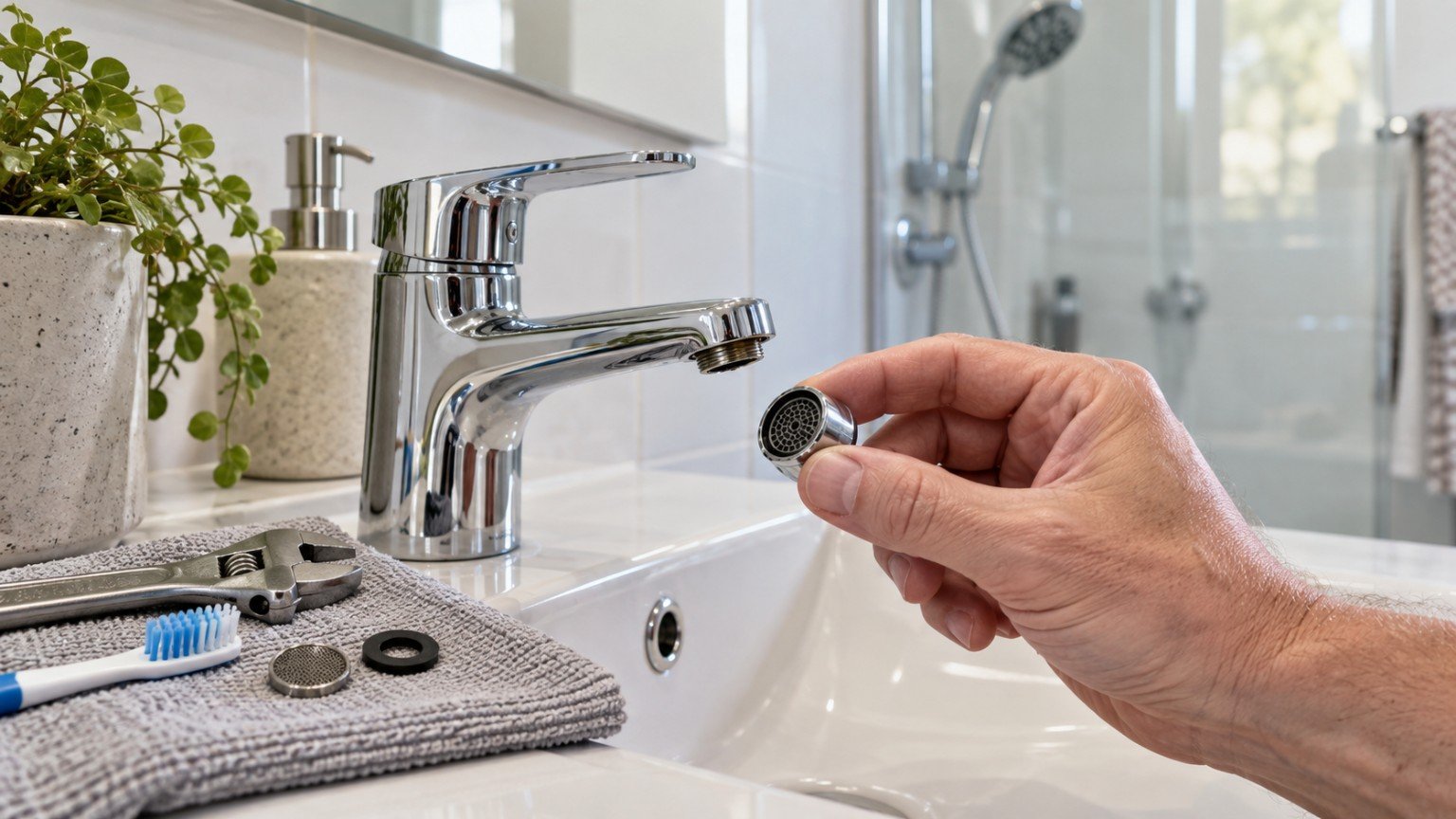
A drip from the end of a tap or a spray of water escaping around a showerhead is one of the most common minor plumbing niggles in an Australian bathroom or kitchen, and it is also one of the easiest to fix without a call-out fee. In most cases the problem is not the tap or shower itself, but a worn washer, a loose connection or a build-up of mineral deposits at the joint. Here is how to work through it safely.
Start by identifying where the leak is actually coming from
Before doing anything, run the tap or shower and look closely at where the water is escaping. There are generally three likely spots:
- The aerator at the very end of a tap spout (the small mesh screen that shapes the water flow)
- The connection where a showerhead screws onto the shower arm or hose
- The hose connection itself, if you have a handheld shower
Knowing exactly where the water is coming from will save you unscrewing parts you did not need to touch.
Tools you will need
- An adjustable spanner or pair of pliers
- A cloth or rag (to protect chrome finishes from scratches and to get a better grip)
- Plumber’s tape (PTFE tape)
- White vinegar, for soaking mineral deposits
- An old toothbrush
Fixing a leaking tap aerator
Wrap the cloth around the aerator to protect the finish, then unscrew it by hand or with pliers if it is stuck. Most aerators loosen anticlockwise. Once removed, check the small rubber washer inside. If it looks flattened, cracked or misshapen, this is very likely your leak, and a replacement washer (available cheaply from any hardware store, often sold to fit standard aerator sizes) will usually solve it. While it is apart, soak the aerator itself in a cup of white vinegar for 20 to 30 minutes to dissolve any mineral buildup, then give it a scrub with the toothbrush before reassembling. Screw it back on firmly by hand, then a small amount further with the spanner, being careful not to overtighten and crack the housing.
Fixing a leaking showerhead connection
If water is escaping from where the showerhead meets the arm, the most common cause is that the plumber’s tape (or rubber washer, depending on the fitting) inside the joint has worn out or was never applied thickly enough. Unscrew the showerhead by hand, again protecting the finish with a cloth. Check for a small rubber O-ring or washer inside the fitting; if it is damaged, replace it. Then wrap plumber’s tape clockwise around the threaded section three or four times before screwing the showerhead back on. The tape helps create a tighter seal and is a cheap, five-minute fix for most drips at this joint. Tighten by hand until firm, then a small amount more with pliers if needed, again avoiding overtightening.
If the leak is from a handheld shower hose
The same approach applies at both ends of the hose. Check the rubber washer at each connection point, replace if worn, and reapply plumber’s tape to the threads before reconnecting.
When mineral buildup is the real culprit
In many parts of Australia with harder water, a “leak” is sometimes actually water finding its way out through a showerhead or aerator whose holes are partially blocked with limescale, forcing water sideways through the fitting instead of straight through. Soaking the fitting in vinegar, as above, often resolves this without needing any new parts at all.
When to call a licensed plumber instead
These fixes cover the great majority of tap and showerhead leaks, but it is time to bring in a licensed plumber if:
- The leak is coming from inside the wall or from the pipe itself, rather than a fitting you can access and unscrew
- Water pressure has dropped noticeably at the same time, which can point to a bigger issue further up the line
- You have replaced washers and reapplied tape and the leak persists
- There is any sign of water damage to surrounding tiles, cabinetry or ceilings below
For the everyday drip though, a spanner, some plumber’s tape and twenty minutes is usually all it takes.
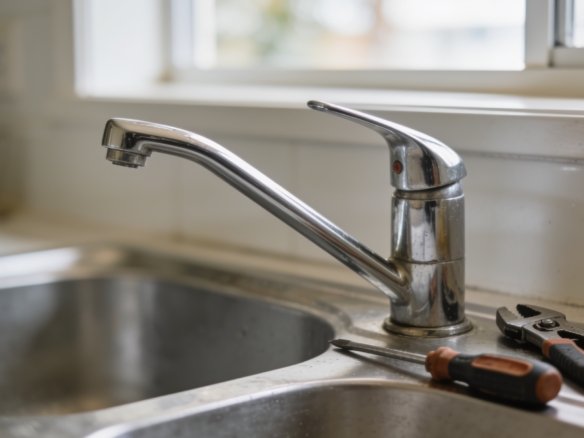
If the drip is coming from the spout rather than a connection, the washer is the usual culprit — see how to fix a dripping tap washer yourself.
Join The Discussion