
 by
by 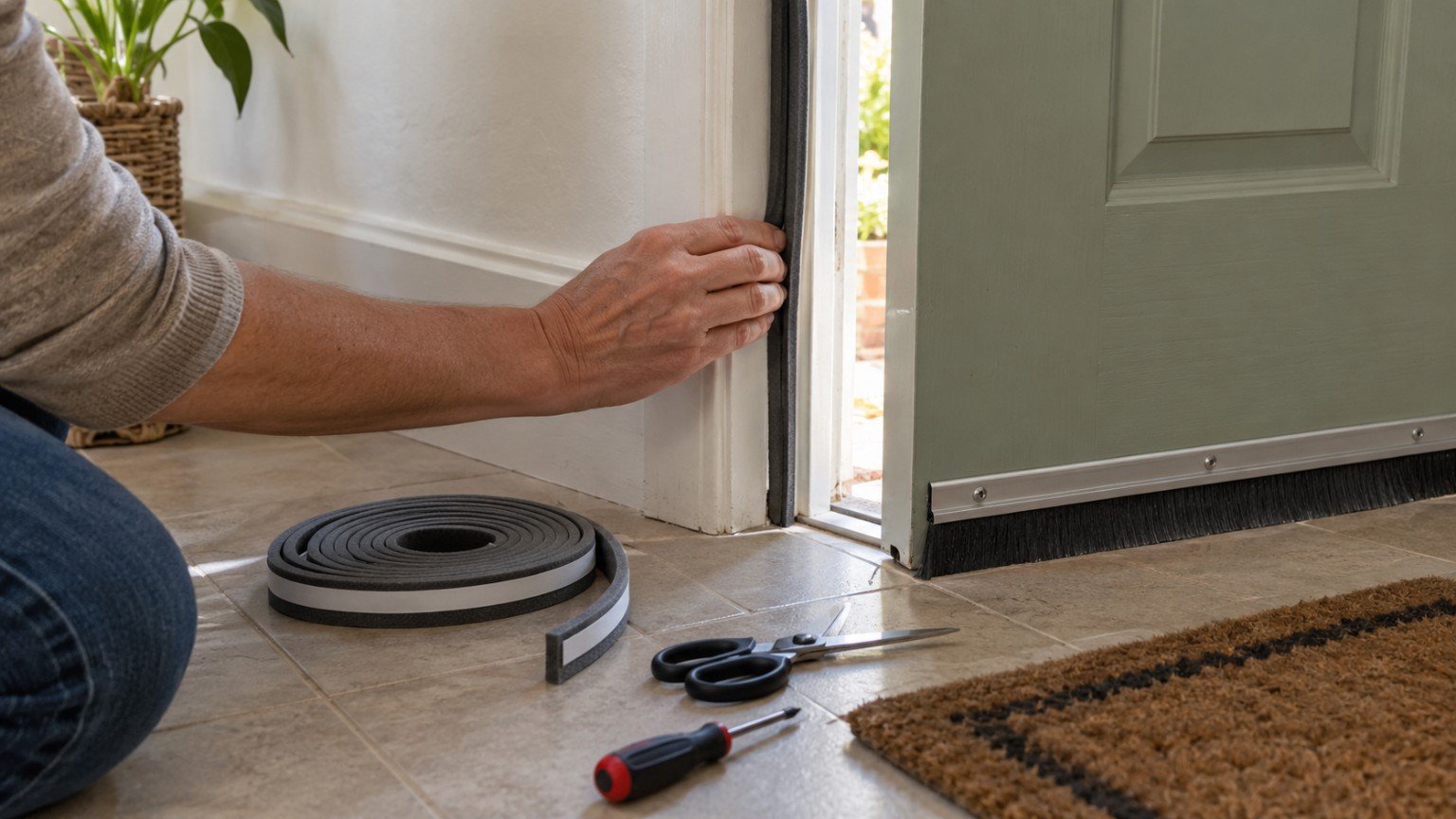
A draughty external door can make a home noticeably colder in winter and harder to cool in summer, and it is one of the cheapest problems in the house to fix. Most of the heat and cool air lost around a door escapes through a handful of predictable gaps: under the door, around the frame, and through the keyhole or letterbox if there is one. Sealing them properly is a genuinely safe, renter-friendly DIY job that usually costs less than a takeaway dinner and takes an afternoon at most.
Find the gaps first
On a breezy day, hold the back of your hand or a lit incense stick (carefully, away from anything flammable) near the edges of the door frame, the threshold, and any keyhole or letterbox. Where you feel a draught or see the smoke move sideways is exactly where the seal needs attention. It is common to find more than one gap, so check right around the full frame rather than stopping at the first one you find.
Sealing the bottom of the door
The gap under an external door is usually the biggest single source of draughts. A few options, roughly in order of cost:
- Door snake or draught stopper — a simple fabric tube that sits along the bottom of the door. Cheapest option, no tools or fixing required, and easy to move between doors.
- Self-adhesive door sweep — a brush or rubber strip that sticks or screws to the bottom of the door and brushes against the floor as it opens and closes. More permanent and effective than a door snake, and still inexpensive.
- Automatic door bottom — a spring-loaded seal that lifts when the door opens and drops to seal the gap when it closes. The most effective option and still a straightforward DIY fit, but slightly more expensive and fiddly to install than a stick-on sweep.
For a rental, a door snake is the safest choice since it requires no fixing to the door itself. For an owned home, a self-adhesive door sweep is usually the best balance of cost and effectiveness.
Sealing the frame
Self-adhesive foam or rubber weatherstripping is the standard fix for gaps around the sides and top of a door frame. Clean the frame surface first with methylated spirits so the adhesive sticks properly, then measure and cut lengths to fit each side. Peel the backing away as you go and press the strip firmly into place, closing the door gently against it to check the door still closes properly before you commit to the full length. V-strip (also called V-seal) weatherstripping is a good option for frames that are slightly uneven, since it flexes to fill the gap rather than relying on a fixed foam thickness.
Keyholes and letterboxes
Older doors with a keyhole or a letterbox slot can let in a surprising amount of draught for their size. Simple keyhole covers and letterbox brushes or flaps are inexpensive and install with basic screws or adhesive, and both are easy to remove later if needed.
Checking your work
Once everything is fitted, repeat the hand-check or incense-stick test from a breezy day. You should notice a clear difference, and the door should still open, close and latch normally. If a seal is stopping the door from closing properly, it is fitted slightly too thick or too far into the frame and is worth adjusting rather than leaving, since a door that will not latch is a security issue as well as a comfort one.
Why it is worth doing
Draught sealing is consistently one of the best value-for-money home comfort fixes available, because the materials are cheap, the job does not require any trade skills, and the benefit (a warmer home in winter, a cooler one in summer, and less strain on heating and cooling running costs) is immediate and ongoing.
When to get help instead
If a door will not sit flush in its frame at all, is warped, or the gap is uneven enough that no amount of weatherstripping closes it properly, that points to an issue with the door or frame itself rather than a simple draught, and is worth a tradesperson’s assessment rather than persisting with seals alone.
Join The Discussion