
 by
by 
Downsizing a family home is rarely just a logistics exercise. It usually comes after years, sometimes decades, of raising a family in the same rooms, and the physical process of clearing it out can feel a lot bigger than “getting rid of stuff.” Whether you are moving to something smaller by choice or circumstance, a structured approach makes the process far less overwhelming than trying to tackle the whole house at once.
Start with why, not what
Before you touch a single cupboard, it helps to be clear on why you are downsizing. Less maintenance, lower running costs, moving closer to family, or simply not needing the space anymore are all valid reasons, and having that reason clear in your mind gives you something to return to when a decision about an old item feels harder than expected. Downsizing that is driven by a clear goal tends to feel more like progress and less like loss.
Work room by room, not all at once
Trying to sort an entire house in one weekend is a common way to burn out early. Instead, pick one room or even one category at a time (books, then linen, then kitchenware) and set a realistic pace, whether that is a room a week or a room a month.
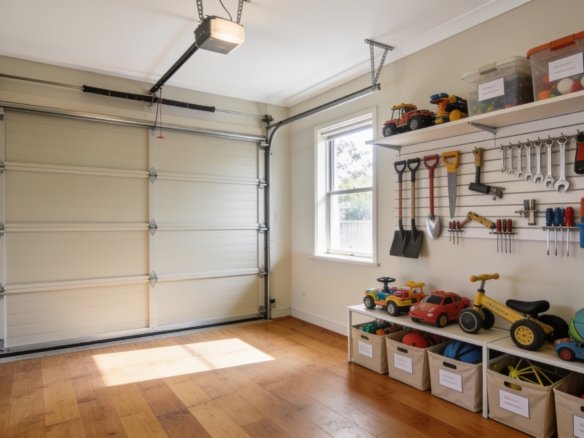
- Start with lower-emotion spaces first, such as the garage, laundry or spare cupboards, before moving to bedrooms and shared family spaces.
- Leave sentimental rooms, like a child’s old bedroom or a study full of family photos, until later in the process, once you have built some momentum.
- Set a simple sorting system for each session: keep, donate, sell, and undecided. An “undecided” box is fine, as long as you revisit it rather than letting it become permanent storage.
Be realistic about what fits the next home
A practical trick that removes a lot of the emotional weight is to measure your new space early and work out roughly what furniture will actually fit. If a piece will not physically fit in the new home, that becomes a much easier and more matter-of-fact decision than “should I keep this or not.”
- Get rough dimensions of the new home’s main rooms before you start sorting furniture.
- Prioritise keeping pieces that are genuinely used day to day over items kept “just in case.”
- Consider which larger items could be gifted to adult children or family members who have space for them, rather than sold or donated to strangers.
Handle sentimental items separately
Photos, kids’ artwork, trophies and other memory-heavy items deserve their own process rather than being rushed through with the rest of the house. A few approaches that genuinely help:
- Set a fixed time limit for sentimental sorting sessions (an hour, not a whole day) so decision fatigue does not take over.
- Photograph bulky sentimental items you cannot keep, so you retain the memory without the physical space.
- Ask adult children directly whether they want specific items before deciding to keep, store or let go of them yourself.
- Give yourself permission to keep a small, defined “memory box” rather than an entire room’s worth of keepsakes.
Get help where it makes sense
Downsizing does not have to be a solo project. Family members can take a day each on different rooms, a removalist can quote separately for a decluttering pass versus the final move, and some councils and charities offer free or low-cost pickup for furniture donations, which is worth checking before paying for removal. If the family home itself needs to be sold as part of the move, that research and paperwork is a separate process worth planning for early, alongside the physical clearing out. Queensland readers who are also weighing up the property and financial side of downsizing, such as body corporate costs on a smaller property or the downsizer super contribution, can find more detail in our guide to downsizing in Queensland.
Pace yourself
Overwhelm in downsizing usually comes from trying to do everything at once, both physically and emotionally. Breaking the process into smaller, scheduled sessions, being honest about what will fit in the next home, and giving sentimental items their own dedicated time all make the process considerably more manageable. It will not feel effortless, but it does not need to feel like a crisis either.
Join The Discussion