
 by
by 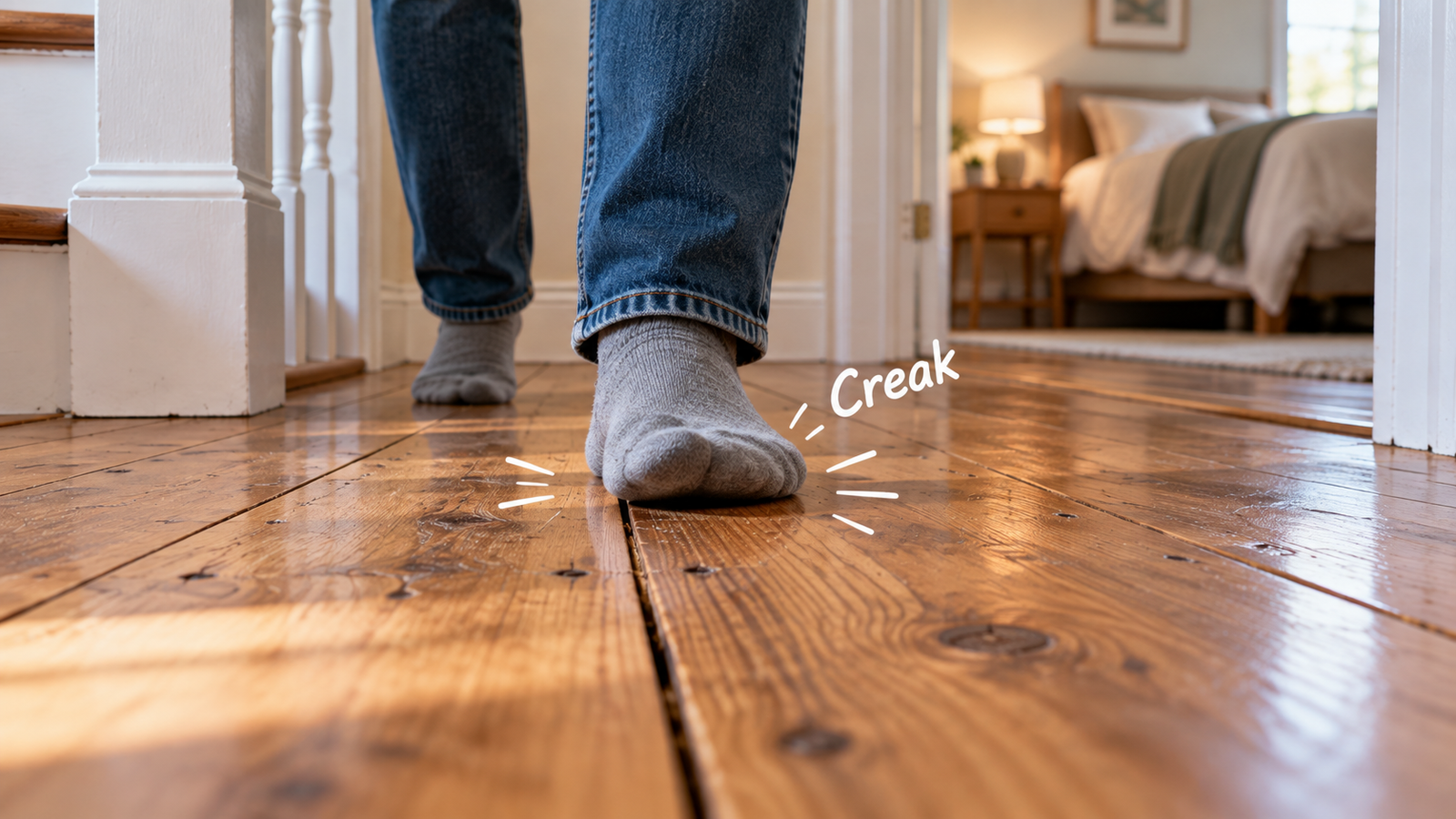
A squeaky floorboard is a common issue in timber flooring, but resolving the noise does not always require taking up the timber. The Australian Timber Flooring Association (ATFA) notes that floor squeaks generally stem from movement within the floor system, often driven by timber expansion, moisture movement, or friction where boards rub against each other. Understanding these underlying causes helps determine whether non-invasive DIY techniques will be effective.
Before undertaking any repair, note that household DIY maintenance differs from work requiring a professional, licensed trade opinion. If there is any concern regarding the structural integrity of your floor, consult a qualified professional before proceeding. These practical methods provide targeted options for addressing squeaks caused by surface friction or minor board looseness.
Method 1: Apply Dry Powder Lubricants to Reduce Friction
When squeaks are generated by friction between adjacent boards, applying a dry powder lubricant can eliminate the noise without altering the floor structure. Dry lubricants work by easing the movement between timber edges that rub together when walked upon.
Talcum powder and powdered graphite are two recognised dry lubricants suitable for this purpose. To apply this method, sprinkle a small amount of talcum powder or powdered graphite directly into the seam between the squeaking floorboards. Work the powder deep into the gap by walking over the area or lightly working it in with a soft cloth. Once the lubricant settles between the boards, sweep away any remaining powder from the surface. Because dry lubricants do not involve liquids or sticky residues, they reduce friction while keeping the surrounding timber clean.
Method 2: Secure Loose Boards from Above Using Specialty Screws
If the squeak is caused by a loose timber board rubbing against an underlying joist, securing the board directly from above can stabilize the movement. This technique relies on hardware designed to fix timber quietly and discreetly.
Trim-head screws or break-off screws can be driven through the top of the squeaky board straight into the joist underneath. These specialty screws feature small heads that allow them to be countersunk beneath the surface of the timber. Once driven into place, the fastener pulls the loose floorboard tightly against the structural joist, stopping the movement that creates the squeak. After countersinking the screw head into the wood, the small hole can be left flush or filled as needed. This approach provides a firm mechanical bond without requiring the removal of surrounding boards.
Method 3: Inject Timber Adhesive or Sealant from Below
When the underside of the floor is accessible, such as through a subfloor crawl space or basement, gaps between the floorboards and joists can be treated from underneath. Stabilizing the timber from below avoids making any holes or modifications on the visible top surface of the floor.
In cases where subfloor access is available, expanding timber adhesives or flexible polyurethane sealants can be injected directly into the gaps beneath the loose floorboards. Applying flexible polyurethane sealant or expanding timber adhesive fills voids caused by timber movement or settling. As the adhesive or flexible sealant cures, it stabilizes the timber floorboards against the joists, preventing movement and eliminating the friction that causes squeaking noises.
Knowing When to Seek Professional Advice
While non-invasive remedies work well for surface friction and minor movement, they may not suit every scenario. The effectiveness of dry powder lubricants, trim-head screws, and subfloor adhesives relative to specific timber species is not specified. Furthermore, there is no single defined threshold for when a squeaky floorboard transitions from a simple maintenance task to a major repair requiring professional intervention.
Do not assume these fixes are appropriate for every flooring type without professional consultation, and never mix chemical products together during application. If non-invasive methods do not resolve the noise, or if the floor shows signs of sagging, instability, or structural weakness, consult a licensed trade professional to assess the subfloor structure and underlying cause.
Join The Discussion