
 by
by 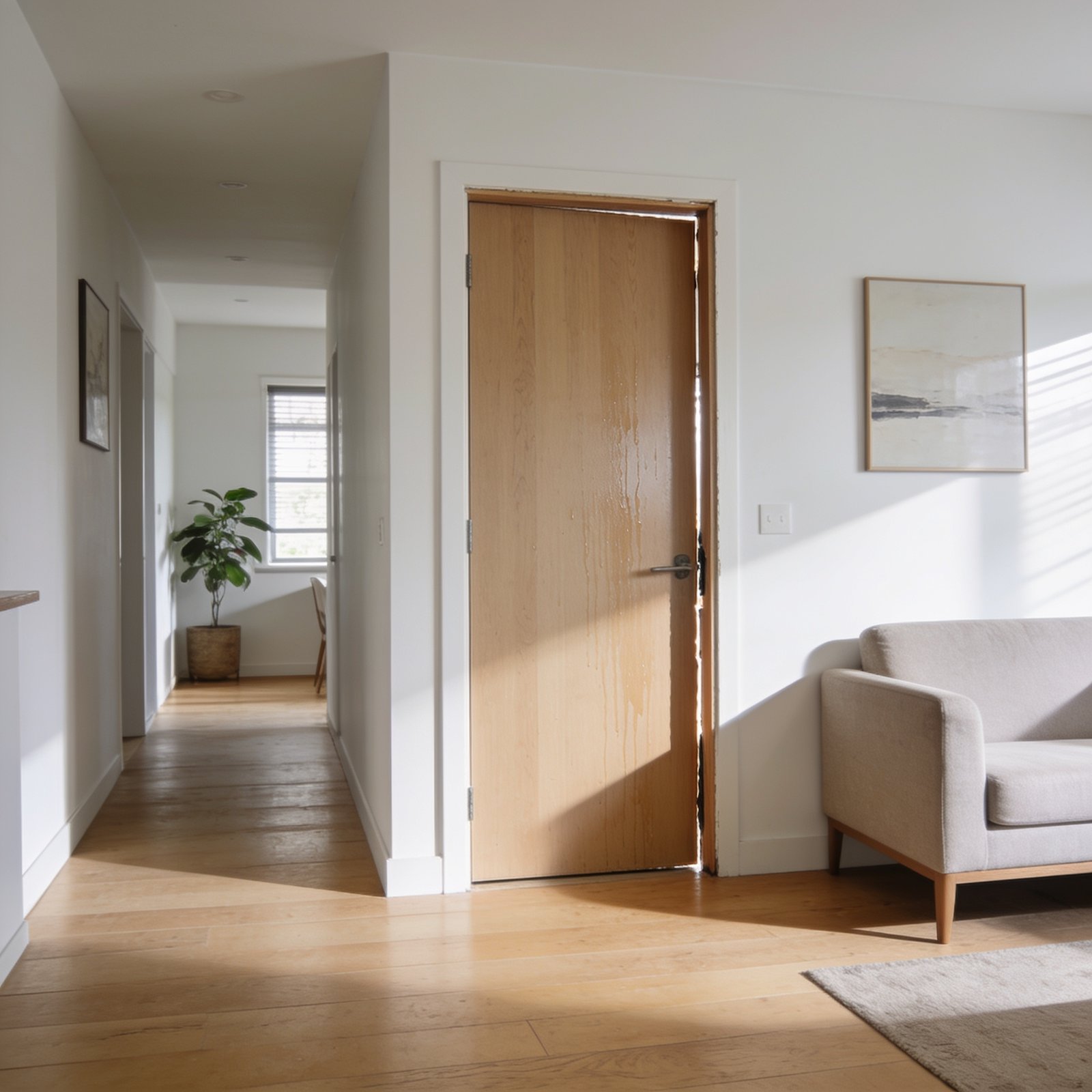
When high humidity sets in, timber doors across Australian homes frequently begin to drag, rub, or jam completely within their frames. Timber is a hygroscopic material, meaning it naturally absorbs moisture from humid air. As moisture enters the wood cells, the timber expands across the grain, causing the door to bind tightly against the jamb.
While taking a plane or sandpaper to a jamming door is a common reaction, trimming off expanded wood without addressing moisture penetration often creates a recurring cycle. Preventative maintenance focused on moisture control and complete timber sealing provides a far more effective strategy.
Immediate Non-Destructive Fixes
Before making permanent alterations to a door or frame, several non-destructive adjustments can provide immediate relief during peak humidity.
- Indoor moisture control: Running air conditioning units or indoor dehumidifiers lowers ambient humidity inside the home, allowing expanded timber to naturally shed moisture and contract back to its original dimensions.
- Edge lubrication: Rubbing paraffin wax, candle wax, or dry silicone spray along the friction points on the latch edge or jamb acts as an immediate non-destructive fix for minor binding. Do not mix different chemical products or lubricants together on the door surface.
- Hinge screw replacement: Over time, short hinge screws can allow the door to sag slightly. Replacing short factory hinge screws with 50mm timber screws can pull the door jamb tighter toward the wall framing, drawing the door frame back and potentially creating the necessary clearance without requiring any timber trimming.
Identifying Contact Points and Pre-Work Safety
If non-destructive methods do not create sufficient clearance, minor planing or sanding may be necessary. Before starting, accurately identify where the door is binding against the jamb. Coating the door edge or frame rebate with chalk or graphite will leave a clear mark at the exact spot where friction occurs upon closing.
Before commencing any sanding or planing work, essential safety precautions must be taken:
- Lead paint testing: Homes built before 1997 in Australia may contain lead-based paint. Paint surfaces must be tested for lead content prior to any sanding or planing. If lead is present, specialized containment and removal procedures are required.
- Personal protective equipment: Dust generated by sanding timber or painted finishes poses respiratory and eye hazards. You must wear eye protection and a P2 particulate respirator mask throughout all sanding and planing operations.
Preventative Maintenance: Sealing All Six Sides
Planing a sticking door removes timber, but it also strips away existing protective paint or varnish, exposing bare wood grain. Unsealed timber absorbs moisture rapidly during the next wave of humid weather, causing the binding problem to return.
To break this cycle, preventative sealing is essential. Major Australian door manufacturers require all six sides of a timber door to be fully sealed to prevent moisture absorption and maintain manufacturer warranties. The six required sides are:
- The front face
- The back face
- The hinge edge
- The latch edge
- The top edge
- The bottom edge
The top and bottom edges are the most frequently neglected parts of a door during installation because they are hidden from view. However, exposed end grain on the top and bottom edges acts like a sponge for high-humidity air. Whenever a door is planed or trimmed, exposed edges must be thoroughly primed, painted, or varnished to prevent moisture from entering the timber across the grain.
Knowing When to Call a Professional
DIY planing is not a permanent solution for all sticking doors. If a door frame shifts significantly due to structural movement or foundation settling, shaving the timber edge will only offer temporary relief and may damage the door’s structural integrity.
Persistent structural misalignment should be evaluated by a licensed builder or carpenter. A qualified professional can determine whether the frame requires structural adjustment rather than surface trimming.

Join The Discussion