
 by
by 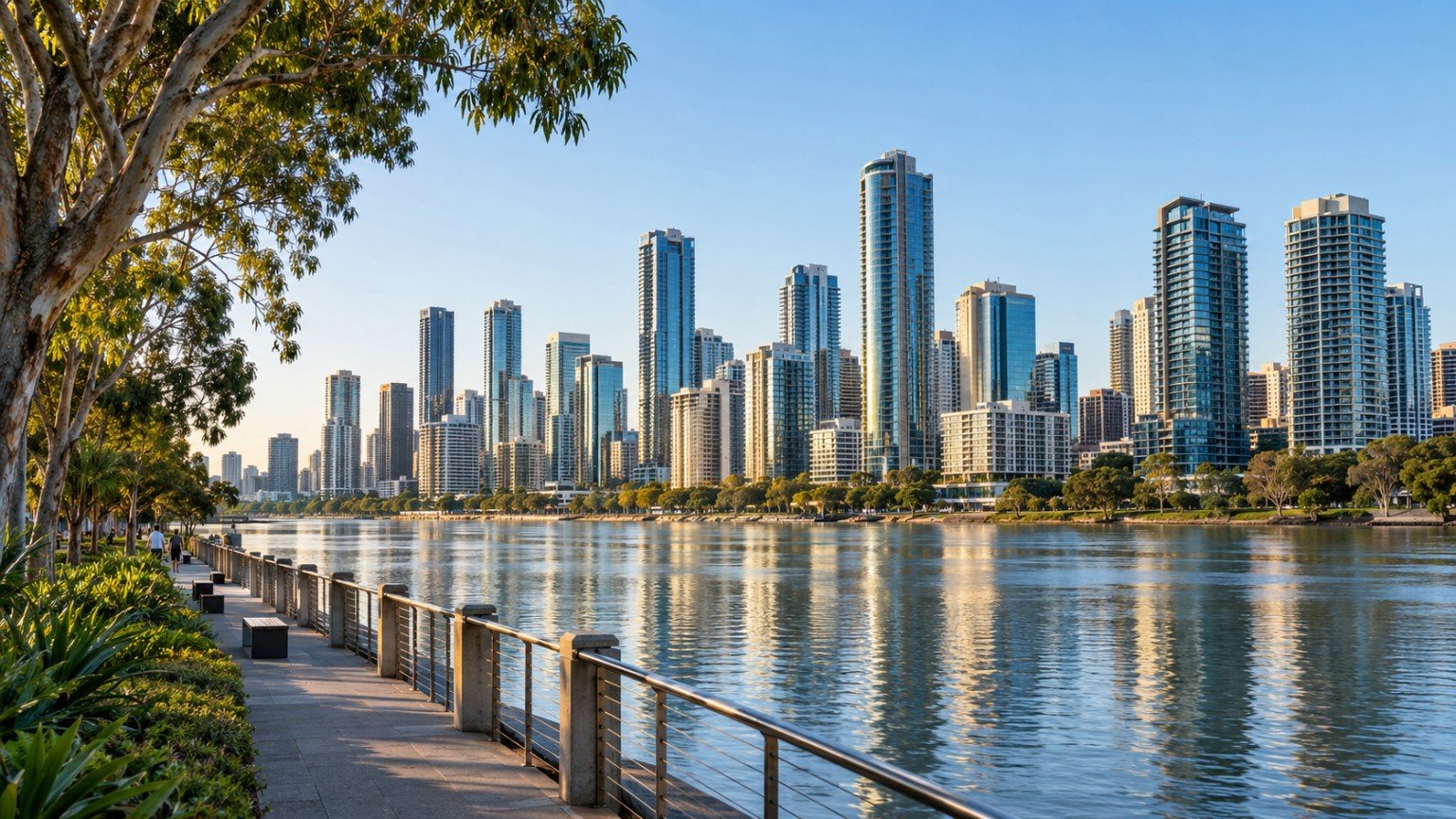
Brisbane CBD occupies a triangular peninsula on the northern bank of the Brisbane River, with water on three sides, within the Brisbane City Council local government area’s Central Ward. It is Queensland’s primary commercial, retail, government and civic centre, and the land use here is overwhelmingly non-residential. Where people do live in the CBD, it is almost entirely in high-rise strata towers rather than detached housing, and that reality should shape expectations throughout this guide rather than a conventional family-suburb template. The peninsula shape itself is worth keeping in mind when you view any property here: river frontage or a river outlook is common, but so is exposure to the noise and activity of a genuinely 24-hour commercial and entertainment district.
Housing and Population
2021 Census data (SAL30379) records 12,587 residents and 8,120 private dwellings in the CBD, with an average household size of 1.8, a ratio consistent with an overwhelmingly high-rise, apartment-based profile. A number of heritage-listed buildings in the CBD sit under City Plan heritage overlays, which is worth checking for any older tower or building under consideration, since heritage status can affect what renovation or redevelopment work is permitted.
Transport
Central and Roma Street are the CBD’s core heavy-rail stations. Two of the four new underground Cross River Rail stations, Albert Street and Roma Street, are being built within the CBD itself, with official guidance pointing to first passenger services from 2029. For the full timeline, see Narevella’s Cross River Rail completion guide rather than a restated summary here. Brisbane Metro runs through the CBD via the Adelaide Street tunnel, King George Square bus station is the principal interchange, and Queen Street Mall forms the pedestrian spine connecting much of the precinct. Buyers should also factor in ongoing construction noise and access changes near CRR works through to project completion.
Schools
Brisbane Central State School, covering Prep to Year 6, is the nearest public primary school. Secondary options vary by exact address between Fortitude Valley State Secondary College and Brisbane State High School. Being within a general catchment area does not guarantee enrolment at either school, so never assume a specific secondary school applies to a CBD address. Verify the exact catchment using the Queensland Government’s EdMap tool before relying on any schooling assumption, and see Narevella’s Fortitude Valley suburb guide for more on that neighbouring catchment.
Health
There is no major public hospital inside the CBD. Royal Brisbane and Women’s Hospital, at Herston, and Princess Alexandra Hospital, at Woolloongabba, are both a short distance away. In-CBD health access is mostly through private specialist clinics and pharmacy, which is worth factoring in if ongoing specialist or GP care matters to your household.
Shopping and Amenities
Queen Street Mall is Brisbane’s largest pedestrian retail mall and the CBD’s commercial heart. The Queen’s Wharf Brisbane integrated resort and entertainment precinct has had a staged opening since August 2024, with remaining hotel components reportedly due by the end of 2026. That completion date has not been independently verified for this guide and should be rechecked directly before being cited as settled, since large staged developments of this kind can shift timelines. Beyond these two anchors, the CBD offers a dense concentration of dining, retail and entertainment options that few other Queensland suburbs can match, though this comes with the trade-offs of tourist and event-driven foot traffic.
Parks and Open Space
The CBD is better served by green space than its dense footprint might suggest, including the City Botanic Gardens, King George Square, Post Office Square, ANZAC Square, Roma Street Parklands and Wickham Park, all offering a genuine break from the surrounding high-rise environment.
Planning and Development
The Brisbane City Centre Neighbourhood Plan, part of City Plan 2014 and effective since 2017, increased development potential across the City Centre. City Plan 2014 is under continual amendment, so always check the live version at cityplan.brisbane.qld.gov.au for the current position on any specific provision rather than citing a fixed rule as permanent. This matters particularly for older buildings, where a change to a heritage overlay or a zoning provision can directly affect a specific tower’s future development potential.
Flood Risk and Hazard Research
The CBD has a documented flood history worth knowing as background. The 2011 Brisbane River flood peaked at 4.46 metres at the city gauge, while the 2022 flood peaked lower, at 3.85 metres, driven by a different combination of riverine, creek and overland-flow factors. Both events affected inner-city areas. This history is general context only, never a property-specific claim. The official Flood Awareness Map and FloodWise Property Report, at fam.brisbane.qld.gov.au, is the address-specific tool that must always be checked for the exact property, and this matters even for upper-floor apartments, since shared building services and basement parking can be affected regardless of floor level.
Family Considerations
Given the CBD’s low household-size profile and its lack of dedicated family-schooling infrastructure, this is genuinely not a conventional family-suburb candidate. It is better understood through the lens of apartment and unit living, strata ownership, and renter or investor considerations than through a family-upgrader framing.
Buyer Considerations
Check body corporate financial health, sinking fund adequacy and any special levies before buying into a CBD tower; Narevella’s body corporate checks guide covers the essentials. Confirm heritage overlay status for older CBD buildings, and check City Plan zoning and City Centre Neighbourhood Plan provisions for the specific site. Run a FloodWise Property Report for the exact address. Factor in noise and activity near entertainment precincts, and be aware of ongoing Cross River Rail works continuing through to 2029.
Nearby Comparisons
Buyers weighing up the CBD often also look at New Farm and Fortitude Valley, both close by with a more residential character, as well as South Bank and West End across the river, each offering a different balance of lifestyle amenity and housing stock. Comparing these alternatives against the CBD’s own trade-offs, dense amenity against limited family infrastructure, is a useful exercise before committing to a specific tower or precinct.
Practical Research Checklist
- Run a FloodWise Property Report for the exact address.
- Check body corporate records and sinking-fund health for any strata purchase.
- Confirm City Plan zoning and heritage overlay status for the specific building.
- Verify school catchment via EdMap for any family-relevant schooling question, despite the CBD’s predominantly non-family profile.
This article is general property research information only, and is not financial, legal or valuation advice. Planning provisions, flood mapping and precinct completion timelines can change, so always verify current details with Brisbane City Council, the relevant Queensland Government agency or a licensed professional before making a purchasing decision.
Useful Narevella Reading
- Compare Suburbs
- Find Property For Me
- Queensland Property Research Checklist
- Premium Property Review
- Brisbane Area Guide, for wider context on the Brisbane City Council area.
Join The Discussion