
 by
by 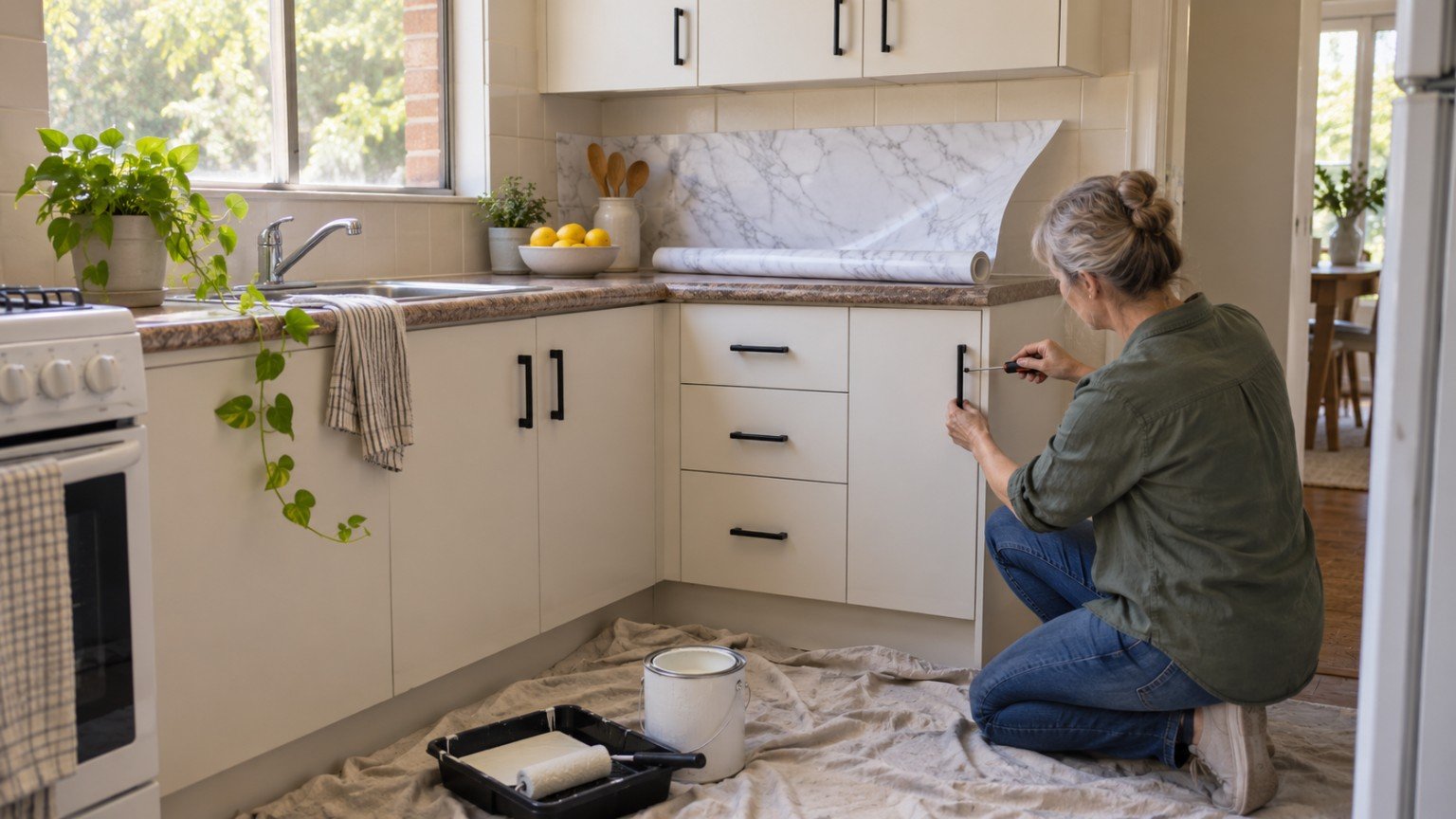
A kitchen doesn’t have to look dated just because a full renovation isn’t on the cards. Most kitchens that feel tired aren’t structurally wrong, they’re simply wearing a decade or two of small details that no longer suit the space: scuffed handles, yellowing lights, a splashback that’s seen too many meals. Updating those details costs a fraction of a renovation and can genuinely change how the whole room feels.
Start with what’s actually tired
Before spending anything, it helps to walk into the kitchen and note what specifically looks dated, rather than assuming the whole room needs work. Often it’s two or three elements doing most of the damage: dull cabinet hardware, an outdated light fitting, or grouting that’s discoloured. Fixing those few things usually delivers more visible change than spreading a small budget thinly across everything.
Hardware first: the cheapest big-impact swap
Cabinet handles and knobs are one of the most cost-effective updates in any kitchen. A full set can often be replaced for a modest outlay, and because most cabinetry uses standard hole spacing, it’s usually a straightforward swap with a screwdriver rather than a job requiring new drilling. Choosing a consistent finish, brushed brass, matte black or brushed nickel are common current choices, gives an instant sense of a considered, updated kitchen rather than a patched-together one.
Paint and surface refreshes
Cabinet doors
Where cabinet doors are timber or MDF rather than laminate, a specialist cabinet paint or primer designed for high-use surfaces can transform them without replacing a single door. It’s a bigger job than hardware, requiring proper cleaning, light sanding and at least two coats, but it’s still a fraction of the cost of new cabinetry. Laminate doors generally aren’t suitable for painting without a specific laminate primer, so it’s worth checking what the existing doors are made of before starting.
Splashbacks
A dated tile splashback can often be freshened with regrouting alone if the tiles themselves are in good condition, discoloured grout is one of the most ageing details in an older kitchen. Where the tiles are genuinely tired, temporary or removable splashback panels are available that sit over the top without permanent fixing, a useful option for anyone who doesn’t own the property or isn’t ready for a full retile.
Lighting and tapware
Kitchen lighting is often original to the build and can date a room more than almost anything else. Swapping a dated pendant or downlight covers for a simpler, current fitting is usually a job for a licensed electrician if it involves wiring, but many pendant fittings can be changed at the fitting itself without touching house wiring, worth confirming with a professional if there’s any doubt. A new tap or mixer at the sink is a similarly small, visible change that tends to stand out because it’s touched daily.
Styling touches that punch above their cost
Open shelving styled with a few everyday items, a runner or mat that adds colour underfoot, and clearing the benchtop of everything except what’s used daily all make a kitchen photograph and feel more finished. A single feature element, a bold rug, a set of glass jars, or fresh tea towels and oven mitts in a coordinated colour, does more for the overall impression than several smaller, unrelated changes.
What to skip if the budget is tight
Benchtops and full cabinetry replacements are where kitchen budgets usually blow out, and they’re rarely necessary to make a real visible difference. Skip anything that involves moving plumbing or altering the kitchen’s layout unless there’s a genuine functional problem, that’s renovation territory with renovation costs attached. It’s also worth holding off on new appliances unless an existing one has actually failed, a tired-looking oven with plenty of life left in it is better disguised with a styling refresh than replaced.
A realistic budget breakdown
For a modest outlay, hardware and a tap swap alone can shift how a kitchen presents. Add cabinet paint or splashback regrouting and the change becomes substantial, still well under what a single new appliance often costs, let alone a renovation. Working through updates in that order, hardware, then surfaces, then lighting, then styling, means the budget goes toward what’s most visible first, and it’s easy to stop at any point once the kitchen feels right again.



Join The Discussion