
 by
by 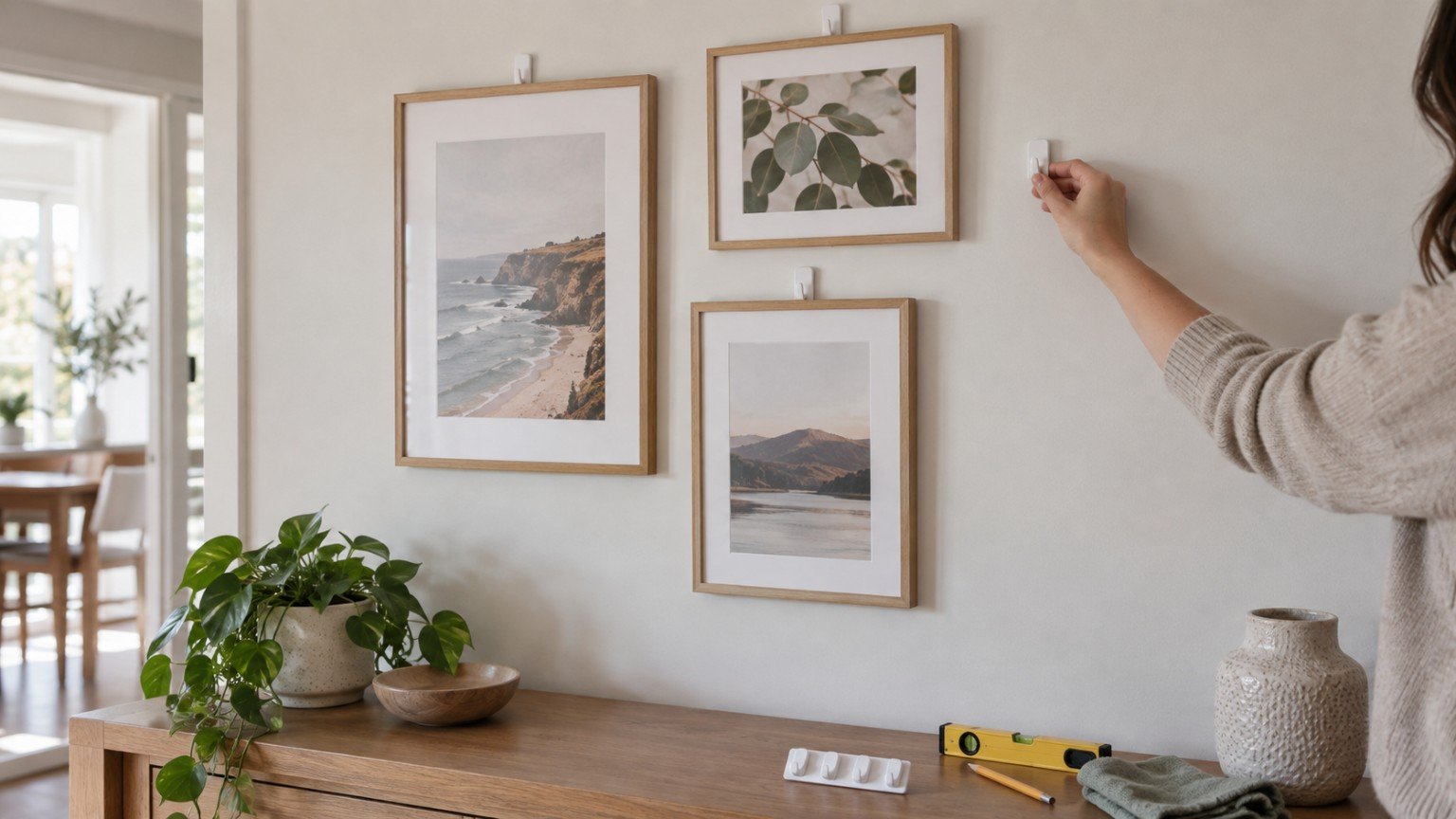
Putting a home together usually means putting things on the walls, but a hole in the wrong spot can cost a renter their bond and cost an owner a repaint. The good news is that most household hanging jobs, frames, mirrors, light shelving, string lights, don’t need a drill at all. A handful of wall-friendly methods will hold almost everything the average home needs to hang, and every one of them comes off cleanly when it’s time to move on.
Why wall-friendly hanging matters
Real estate agents and property managers look closely at walls during routine inspections and at the end of a lease. Multiple nail holes, cracked plaster around a fixing, or sticky tape residue on paint are common reasons a small amount gets withheld from a bond. Homeowners have less at stake financially, but a wall full of unnecessary holes still means more filling and touch-up paint than most people want to deal with before selling or simply refreshing a room.
The methods below are graded by how much weight they can carry, because the biggest mistake with wall-friendly hanging isn’t the method itself, it’s using the wrong one for something too heavy.
Getting the most out of adhesive strips and hooks
Adhesive strip systems, the kind sold in hardware stores in small, medium and large sizes, are the first stop for most light to medium items. They rely entirely on a clean bond between the strip and the paint, so the way they’re applied matters as much as the product itself.
Prepping the surface properly
Wipe the wall with a little methylated spirits or a mild detergent solution on a cloth, then let it dry completely before sticking anything down. Skipping this step is the single biggest reason adhesive hooks fail, dust and oils from hands and cooking stop the adhesive from bonding properly. Press firmly along the whole strip for the full time stated on the packaging, then leave the item off the hook for the hour or so recommended before hanging anything, so the bond has time to set.
Reading the weight rating honestly
Every strip and hook is rated for a maximum weight, and it pays to round down rather than up. A frame that includes glass is heavier than it looks once you add the actual weight of the glass and backing board, so weigh it on kitchen scales if there’s any doubt. Textured or freshly painted walls also reduce how well adhesive bonds, so it’s worth choosing a rating well above the item’s actual weight for anything going on a wall that isn’t smooth and cured paint.
Picture hooks: still the simplest option for frames
A single small picture hook, the type that uses one fine nail driven in at an angle, remains one of the least damaging ways to hang a proper frame. The hole it leaves is small enough to disappear under a dab of the same coloured paint or a bit of white toothpaste in a pinch, and it holds real weight far better than most adhesive options. This is a routine, low-impact fixing rather than a structural one, and it’s the standard method most rental agreements accept for hanging artwork, so it’s worth checking a lease’s fine print rather than assuming it’s off limits.
Options for heavier or trickier items
Adhesive picture rail hooks
Older homes and some apartments still have a picture rail moulding near the ceiling. Purpose-made rail hooks clip over the rail and let a cord or wire hang down to the frame, with zero contact with the painted wall surface at all. It’s an easy option to overlook simply because picture rails have gone out of fashion, but where one exists it’s often the strongest wall-friendly method available.
Tension rods and freestanding solutions
For room dividers, hanging plants near a window, or lightweight curtains, a spring-tension rod wedged between two walls or inside a doorway avoids fixings altogether. Freestanding shelving units, ladder-style shelves, and leaning mirrors solve the same storage and styling problems as wall-mounted versions without touching the wall at all, which is worth considering for anything genuinely heavy.
What to avoid
Steer clear of anything that requires drilling into masonry, brick veneer, or structural framing to install a wall anchor, that’s a job for a licensed tradesperson if it’s ever genuinely needed, not a weekend hack. Avoid double-sided foam tape sold for general craft use, it isn’t designed for wall paint and tends to pull the surface off when removed. And resist the urge to overload a small hook because it’s convenient, a single overloaded fixing is more likely to mark the wall on failure than a properly rated one.
Taking it all down cleanly
When it’s time to remove adhesive strips, pull slowly and downward, following the direction printed on the packaging, rather than straight off the wall. This activates the release mechanism most brands build in and avoids taking paint with it. For picture hook holes, a small amount of spackle or filler, left to dry and given a light sand, is usually enough to leave the wall inspection-ready. Keeping a small tin of touch-up paint on hand for exactly this moment saves a last-minute scramble before an inspection or a final walkthrough.



Join The Discussion