
 by
by 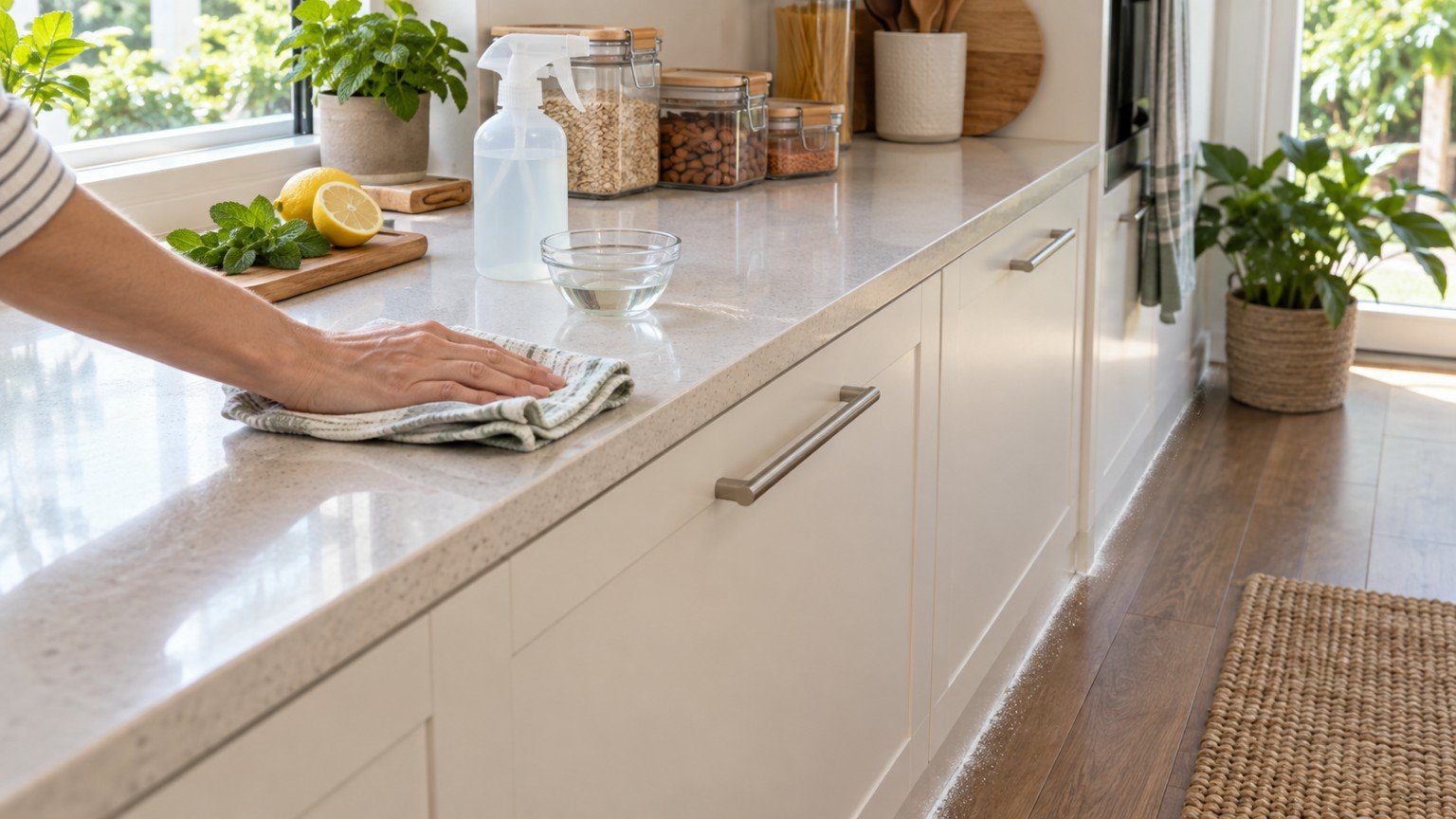
Ants finding their way to a kitchen bench is one of the most common household pest complaints in Australia, and it tends to pick up whenever the weather warms. The good news is that most kitchen ant problems can be managed with cleaning habits, sealing and a few natural deterrents, without needing to reach for a harsh chemical spray around food preparation areas.
Why ants target the kitchen
Ants are foraging for food and water, and a kitchen usually offers both in easy reach. Scout ants leave a scent trail back to the nest once they find a reliable food source, which is why a few ants can turn into a steady line within a day or two. Breaking that scent trail and removing the food source is the fastest way to stop the problem getting worse.
Start with cleaning, not spraying
Wipe up trails and spills immediately
Wipe down benches, tables and floors as soon as you notice crumbs, spills or sticky residue, particularly around the stove, bin and pet food bowls. A general household cleaner or warm soapy water is usually enough to break down the scent trail ants are following, which discourages more from following the same path.
Seal food properly
Store pantry staples like sugar, flour, cereal and pet food in airtight containers rather than their original packaging, since ants can chew through cardboard and thin plastic. Keep fruit bowls, honey jars and other sweet foods wiped clean on the outside, and don’t leave pet food bowls out overnight if ants are already a problem.
Natural deterrents that can help
None of the following will eliminate an established colony on their own, but they’re useful, low-risk ways to discourage ants from crossing into food areas.
Vinegar and citrus
A mix of equal parts white vinegar and water, wiped along benches, windowsills and entry points, disrupts the scent trail ants rely on and is safe to use around food preparation surfaces. Citrus peel or a few drops of citrus essential oil along entry points can have a similar deterrent effect for some ant species.
Cinnamon, pepper and other barriers
Ground cinnamon, black pepper or chalk lines along skirting boards, window tracks and door thresholds are commonly used as simple physical or scent barriers. Results vary depending on the ant species involved, so treat these as one part of a broader approach rather than a complete fix.
Block the entry points
Ants are usually coming in through small gaps around windows, skirting boards, pipe entries or door thresholds. A walk around the outside of the kitchen wall, looking for cracks or gaps and sealing them with a suitable filler, can meaningfully cut down on new entries. This is especially worth doing in older homes where gaps tend to open up over time.
Managing an outdoor nest safely
If you can see where ants are entering from outside, such as a nest near a foundation or path, pouring boiling water directly on a visible outdoor nest is a commonly used, low-risk option that avoids introducing chemical residue near the home. Avoid mixing household chemicals together in an attempt to create a stronger treatment, since combining products like bleach with other cleaners can produce dangerous fumes. If you do choose to use a commercial ant bait or treatment, always follow the label instructions exactly, including where it’s safe to place it around children and pets.
When to call a pest professional
If ants keep returning despite consistent cleaning and sealing, or if you’re dealing with a large, established colony inside wall cavities, it’s worth calling a licensed pest control provider. They can identify the species involved and use targeted, professionally applied treatments that are generally more effective and better contained than DIY options for a persistent infestation.
For most households, a combination of prompt cleaning, sealed food storage and a few natural deterrents around entry points is enough to keep kitchen ant trails under control without needing anything harsher than what’s already in the pantry and cleaning cupboard.
Join The Discussion