
 by
by 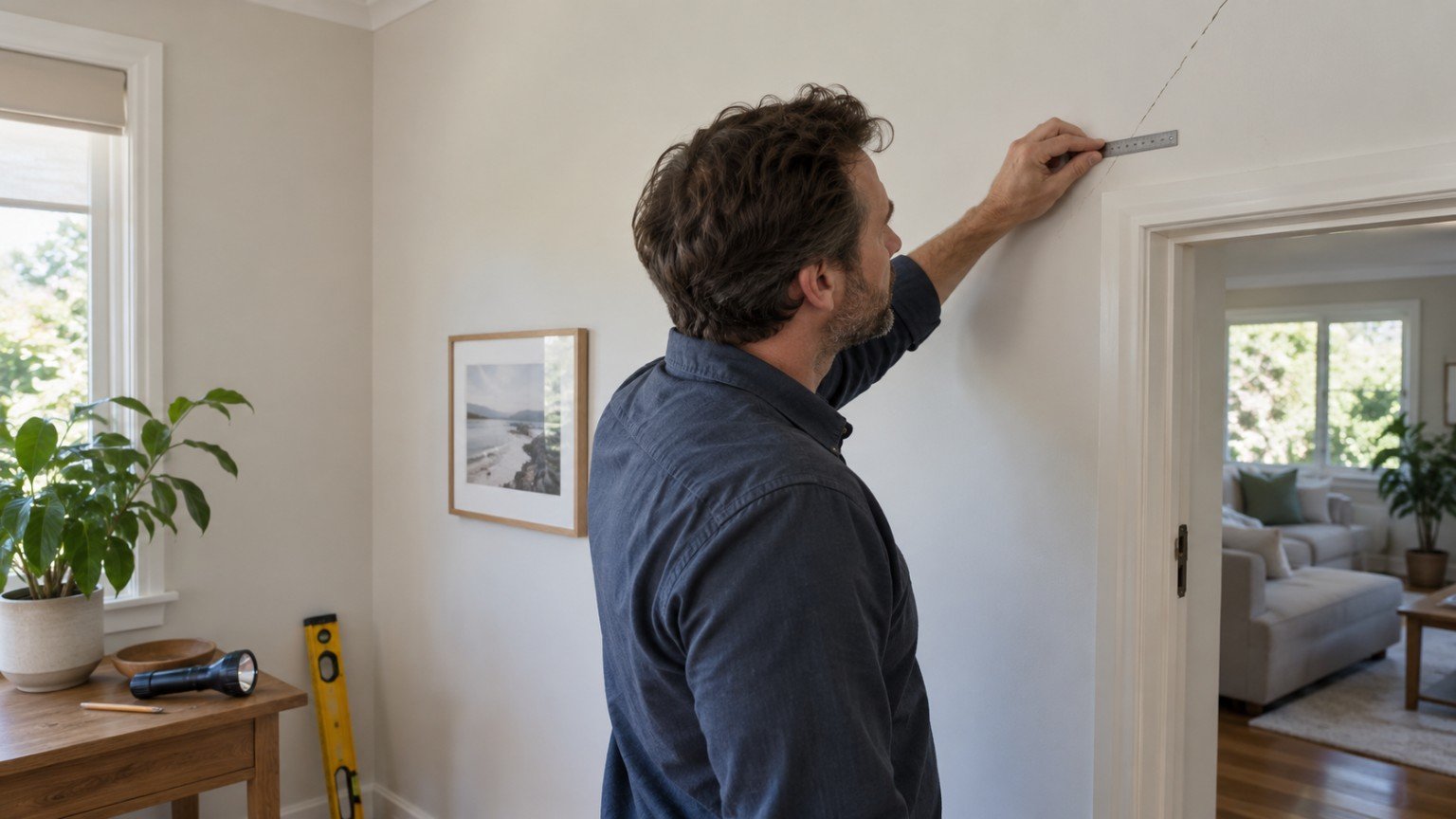
A crack appearing in a wall is one of those things almost every homeowner notices at some point, and it is natural to wonder straight away whether it is something to worry about. The honest answer is that most wall cracks in Australian homes are cosmetic, caused by ordinary things like paint flexing, minor plasterboard joint movement, or the seasonal expansion and contraction that every house goes through. But a small number of cracks are early signs of something more serious, and telling the two apart from a visual check is genuinely possible for most homeowners.
This guide sticks to what you can safely observe. It is not a substitute for a professional assessment, and any crack that concerns you is always worth having looked at properly rather than guessing.
Signs that usually point to cosmetic cracking
- Hairline width. Cracks less than about 1mm wide, often described as hairline, are usually surface-level and related to paint or plaster movement rather than the structure itself.
- Straight and consistent. A crack that runs in a straight, even line, particularly along a plasterboard joint or in the corner where a wall meets a ceiling, is often just movement at that join rather than anything structural.
- Confined to one small area. A short crack that does not extend beyond a single panel, doorway or corner is generally lower concern than one that runs across a large section of wall.
- No change over time. A crack that has stayed exactly the same width and length for months, even through a change of season, is a reassuring sign that whatever caused it has settled rather than being an ongoing, active movement.
- Matches a known cause. Cracks that appeared shortly after a new home’s first year or two (as timber and plaster settle), after a very dry or very wet spell, or near a spot where a door slams regularly, usually have an identifiable, benign explanation.
Signs worth a professional opinion
- Width greater than about 5mm, or a crack that is clearly wider at one end than the other
- Diagonal cracking, particularly running from the corner of a window or door frame up towards a corner of the wall or ceiling
- Cracks that appear on both sides of a wall in roughly the same spot, suggesting the movement runs through the wall rather than sitting on the surface
- Doors or windows that have started sticking or no longer close properly around the same time a crack appeared nearby
- A crack that is actively growing, whether that is longer, wider, or both, over a period of weeks or months
- Cracking that runs from the ground up through brickwork or render on the outside of the house, especially a stepped pattern following the mortar lines
- Any crack appearing alongside a sloping floor, a gap opening up under a skirting board, or visible separation between a wall and the ceiling
None of these signs on their own is a guaranteed structural problem, and plenty of homes have one or two of them without anything serious going on. But this combination of signs is exactly the kind of thing a structural engineer or qualified building inspector is trained to properly assess, and it genuinely is not something to try to diagnose yourself.
A simple way to monitor a crack you are unsure about
If a crack does not clearly fall into either category, a useful first step while you arrange a professional opinion is to monitor it. Mark each end of the crack lightly in pencil with today’s date, and check back every few weeks to see whether it has grown past your mark. This will not tell you what is causing the crack, but it will tell you whether it is active, which is genuinely useful information to pass on to whoever you bring in to assess it.
Why a DIY structural diagnosis is not the right approach
Working out whether a crack reflects genuine movement in a home’s footings, frame or slab requires assessing the whole structure, the soil conditions, drainage, and often the home’s history, not just the crack itself. It is a job for a structural engineer or an experienced building inspector, not something to guess at from a single visible sign, however confident that sign might seem. If you are researching a home you are about to buy, a full building and pest inspection is the right starting point, since it will flag structural concerns for further assessment as part of the process.
The practical takeaway
Most wall cracks are nothing to worry about, and it is normal for a home to develop a few hairline cracks over the years without anything being wrong. But when a crack is wide, diagonal, growing, or turning up alongside sticking doors or a sloping floor, that is the point to bring in a structural engineer rather than continuing to watch and wonder. Getting a professional opinion early is inexpensive relative to the peace of mind, or the early warning, it provides.

Join The Discussion