
 by
by 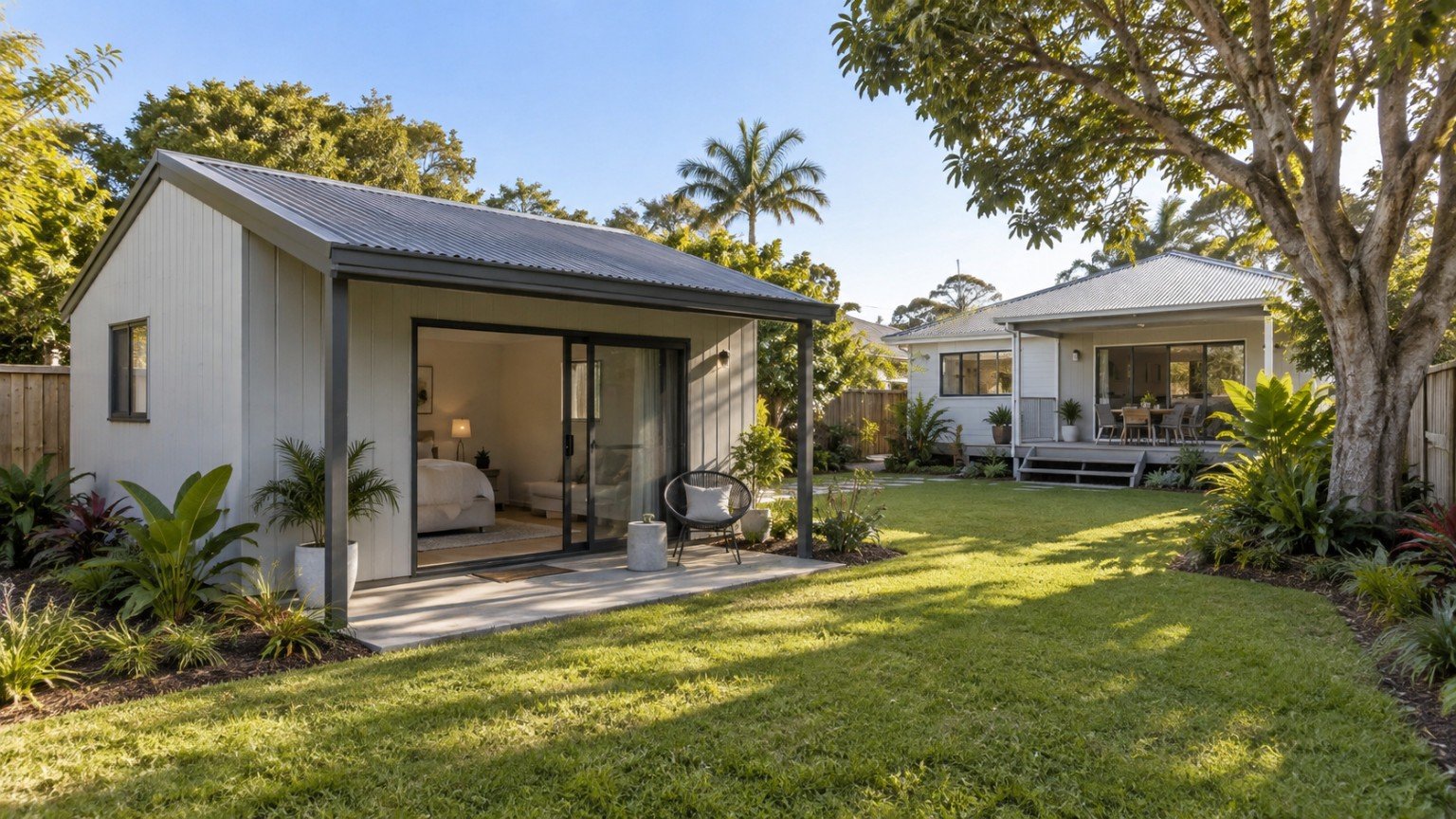
Current as at September 2026. A search for “granny flat” content on Narevella currently returns nothing, despite it being one of the most commonly searched property topics in Queensland. It is also a topic where a lot of the content already online is out of date, because the rules changed materially in 2022 and are changing again through 2026. This article sets out the current position.
The Rule Change That Most Content Still Gets Wrong
Since the Planning (Secondary Dwellings) Amendment Regulation 2022 commenced in late September 2022, a Queensland secondary dwelling may be rented to someone outside the household, state-wide. Before that change, Queensland rules generally required a secondary dwelling to be occupied by a member of the same household as the main dwelling, which meant owners could not usually rent it out to an unrelated tenant. This is the single most valuable fact in this article, and a lot of content written before 2022, or simply not updated since, still states the old position.
Approvals Are Still Required
Building approval remains mandatory for all new secondary dwellings. Council planning approval requirements were not removed by the 2022 change. Many Queensland councils allow secondary dwellings as accepted development where certain criteria are met, meaning no formal development application is needed and only a building approval is required, but this varies by council and by lot. Do not assume your council or your specific lot qualifies without checking. See Do You Need Council Approval for a Renovation in Queensland? for the general approval framework this sits within.
The Size Rules Are Changing Through a Transition Period
From 1 September 2026, the Queensland Housing Code adds a state-level acceptable solution of 50 square metres internal floor area, rising to 60 square metres on lots of 1,000 square metres or larger. Councils adopt this over a three-year transition period, which means the applicable size limit today genuinely depends on whether your local council has adopted the new state provision yet. Check your local planning scheme directly rather than assuming the new figures already apply everywhere. This size change sits inside the wider Queensland Housing Code and Modern Homes Standards update covering August and September 2026, which is worth reading in full: Queensland’s New Housing Code and Modern Homes Standards.
The Rest of the Practical Checklist
Beyond size and the rental question, a secondary dwelling still has to satisfy the usual site-specific requirements: setbacks, site cover, private open space and car parking under the relevant planning scheme. It must also remain on the same lot and title as the main dwelling. A secondary dwelling is not a subdivision, and adding one does not create a separate title, which is a genuinely different research question. If subdivision potential is what you are actually assessing, see How to Check Property Zoning in Queensland and Zoning and Property Overlays in Queensland as the starting point instead.
Also worth checking before committing to a design: sewer and water connection points, which a secondary dwelling adds a second demand on (see Sewer Lines and Underground Infrastructure), any developer covenant that may restrict secondary dwellings on a newer estate lot regardless of what the planning scheme allows (see Covenants and Property Restrictions in Queensland), and the fact that adding a secondary dwelling can change rates and, in some council areas, water charging.
QBCC and the Home Warranty Scheme
Building a secondary dwelling is residential building work, and the Queensland Home Warranty Scheme threshold of more than $3,300 in insurable value will normally be crossed for a project of this scale. Confirm the builder holds a current QBCC licence of the right class and that the home warranty premium has actually been paid before you sign anything.
For Buyers, Not Just Owners
If a property is advertised as having a granny flat, verify it was actually approved before you rely on that in your decision. An unapproved secondary dwelling is, in effect, an unapproved structure, and it can affect finance, insurance and any assumption you might make about rental income. See Buying a Property With Unapproved Structures in Queensland for what to check before you assume an existing secondary dwelling is compliant.
Also worth noting: Narevella does not make claims about rental returns or suggest that a granny flat “pays for itself.” Any such claim depends on facts specific to a property and a market that this site does not verify or predict.
This article is general research information only. It does not constitute planning, legal or financial advice, and Narevella is not a real estate agency, valuer or planning consultant. Approval pathways, size thresholds and council adoption of the new state provisions vary and change, so confirm current requirements directly with your local council before committing to a design or a purchase decision.
Useful Narevella Reading
- Compare Suburbs — compare areas before you commit to a secondary dwelling project.
- Find Property For Me — get help finding a property suited to a secondary dwelling.
- Queensland Property Research Checklist — the full due-diligence list for any Queensland purchase.
- Council Rates, Water Charges and Settlement Adjustments — what a second dwelling can change at settlement.
Join The Discussion