
 by
by 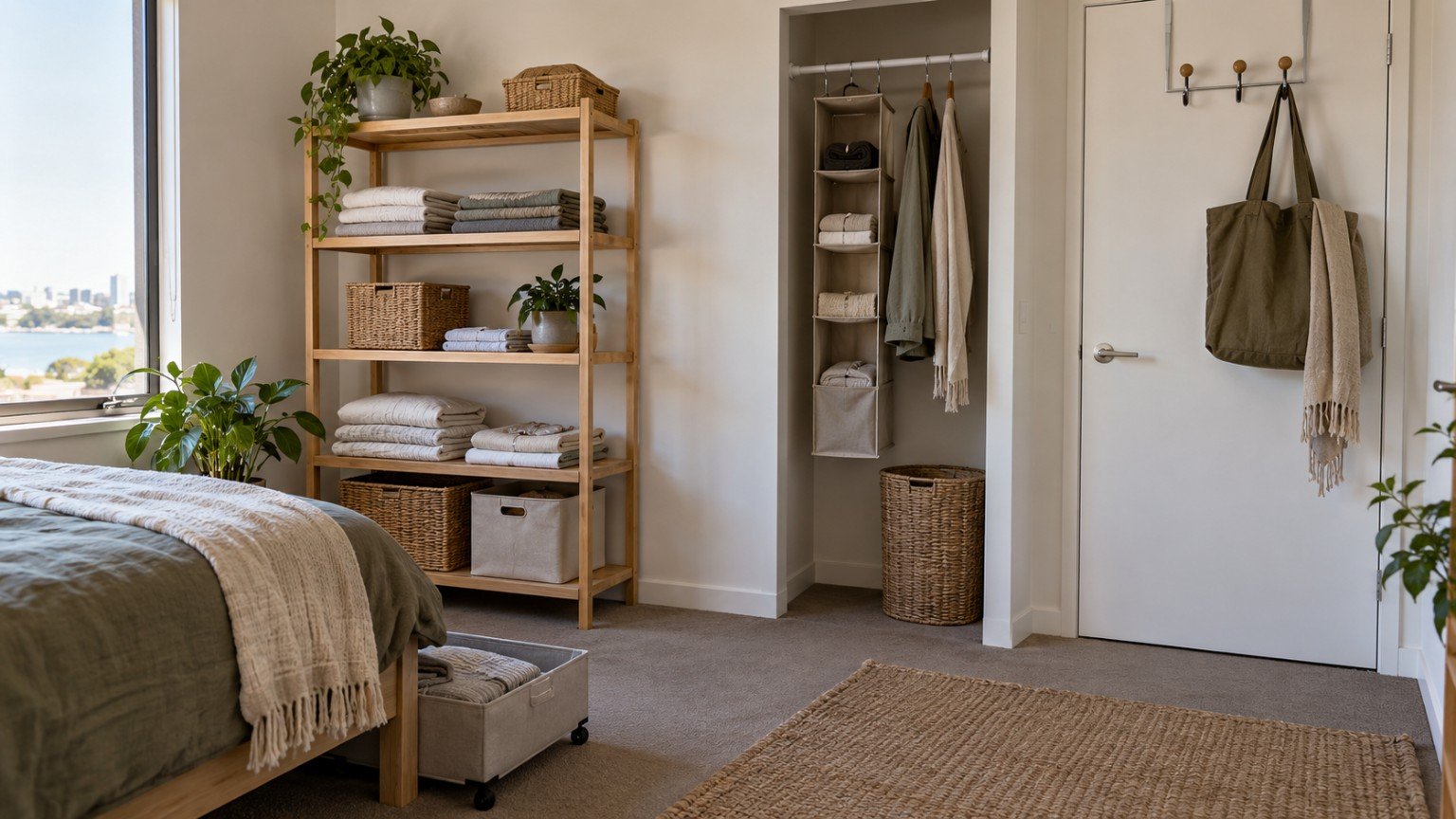
Storage is one of the most common frustrations for renters, particularly in older apartments and smaller homes where built-in storage is often limited. The challenge is finding solutions that genuinely help without leaving holes in the walls or risking part of your bond. Fortunately, there are plenty of practical options that add real storage without a single drill hole.
Start with what you already have
Before buying anything new, it is worth auditing the storage you already have and how efficiently it is being used. Wardrobes, under-bed space and kitchen cupboards are often only using a fraction of their potential volume. Stackable containers, over-the-door organisers and drawer dividers can meaningfully increase how much a space holds before you add a single new piece of furniture.
Command hooks and adhesive strips
Modern adhesive hook and strip products have improved considerably and can hold a genuinely useful amount of weight when applied correctly to a clean, smooth surface. They are ideal for hanging light items such as coats, bags, kitchen utensils, keys or small baskets, and most brands are specifically designed to remove cleanly without damaging paint when you eventually move out, provided you follow the removal instructions on the packaging rather than simply pulling them off.
Always check the weight rating before relying on one for anything valuable or breakable, and avoid textured or freshly painted walls, since adhesive products need a smooth, cured surface to hold properly.
Freestanding furniture that adds vertical storage
Tall, narrow shelving units
A slim bookcase or shelving unit tucked into an unused corner or alongside a doorway can add a meaningful amount of storage without needing to be fixed to the wall. Look for units with a wide, stable base if you are concerned about tip-over risk, particularly in a home with young children.
Over-the-toilet and bathroom ladder shelving
Freestanding shelving units designed to straddle a toilet cistern or lean against a wall are a genuinely useful way to add bathroom storage in a space that typically has very little of it, all without a single fixing.
Room dividers with built-in storage
A freestanding shelving unit used as a room divider can serve two purposes at once in an open-plan or studio-style rental, adding storage while also visually zoning the space.
Making the most of under-used spaces
- Under the bed: flat storage boxes or drawers on castors can hold seasonal clothing, linen or rarely used items without taking up any floor space elsewhere
- Behind doors: over-the-door organisers or hanging shoe racks work well for shoes, accessories or cleaning supplies
- Inside wardrobes: a hanging shelf insert or stackable drawer unit can roughly double a wardrobe’s effective storage without any modification to the wardrobe itself
- Corners: a corner shelf unit or ladder shelf makes use of a space that is otherwise frequently wasted
Tension rods and pressure-fit solutions
Tension or pressure-fit rods, which hold themselves in place through spring pressure rather than any fixing, can be used to create an instant extra hanging rail inside a wardrobe, an additional curtain in an alcove, or even a makeshift divider inside a deep cupboard. They are inexpensive, fully removable, and leave no trace when you eventually take them down.
Multi-purpose furniture
Ottomans, storage benches and coffee tables with built-in storage let you add seating or a surface while also gaining hidden storage space, all without needing any wall fixings at all. These are particularly useful in a studio apartment or small living room where every piece of furniture needs to work harder than it would in a larger home.
Check your lease before you start
Even fixing-free solutions are worth double-checking against your lease agreement, since some agreements have specific clauses about adhesive products or freestanding furniture near fire exits and windows. It is also worth photographing any walls or surfaces before applying adhesive hooks, so you have a clear record of the original condition if there is ever a dispute at the end of your tenancy.
A simple approach to get started
- Audit your existing storage and add organisers before buying anything new
- Identify your most under-used spaces, such as under the bed, behind doors and unused corners
- Add one or two freestanding pieces suited to your biggest storage gap
- Use adhesive hooks and tension rods for lighter, everyday items
- Keep receipts and product instructions in case you need to remove anything cleanly before moving out
With a bit of planning, it is entirely possible to add substantial, genuinely useful storage to a rental without a single hole in the wall, and without putting any part of your bond at risk.
Join The Discussion